
In contrast to a 1995 essay claiming that carceral writing is fundamentally similar because ‘a prison is a prison is a prison’, David Schalkwyk and Daniel Roux trace the differences between incacerated writer accounts, through the Bakhtinian lens of the chronotope (the representation of time in relation to space), by examining the interaction of the writer’s immediate experience of space and time, their place in broader historical time and geographic space, and the relation between the time and place of writing and publication and attitudes to past, present and future.
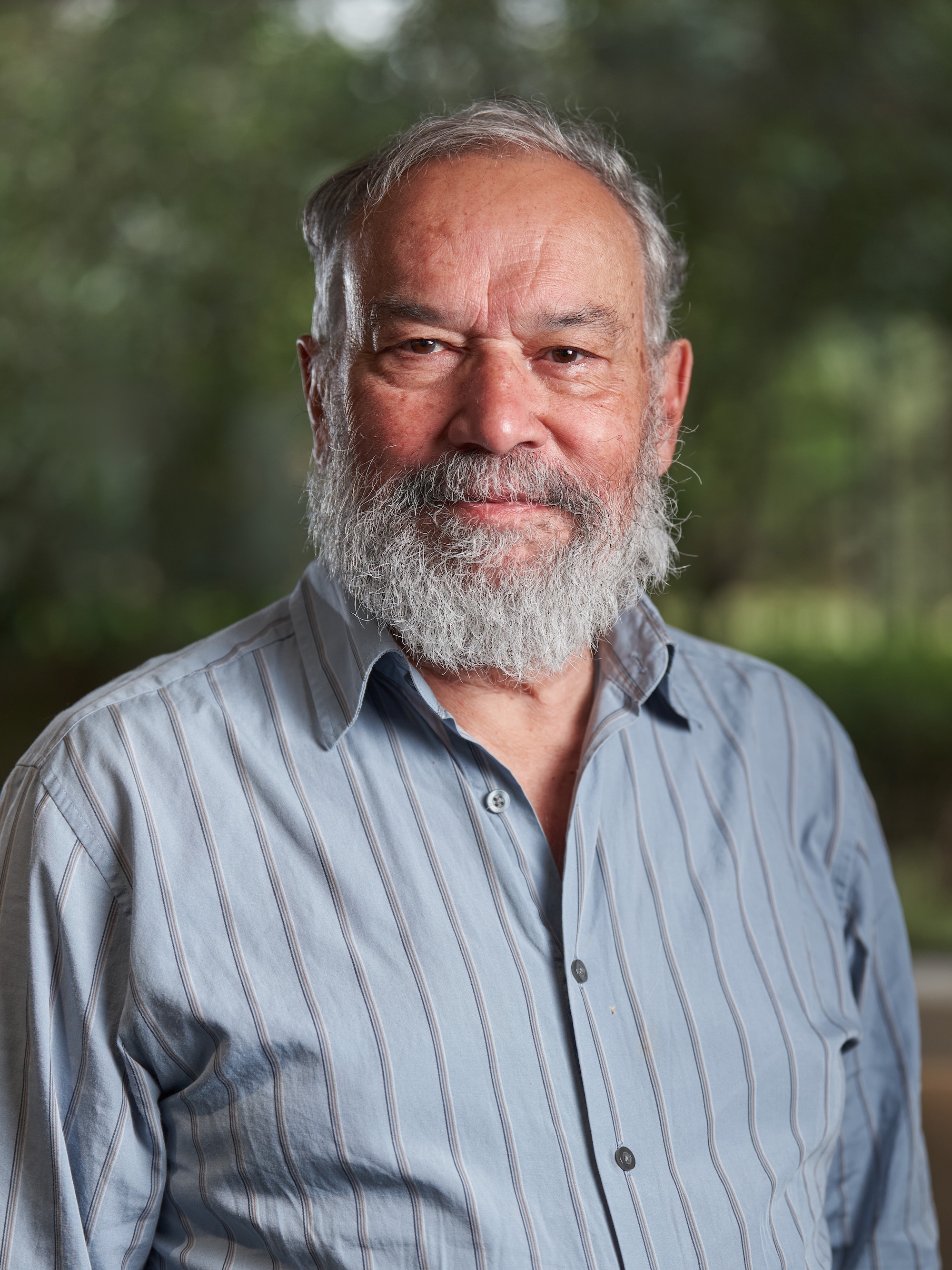
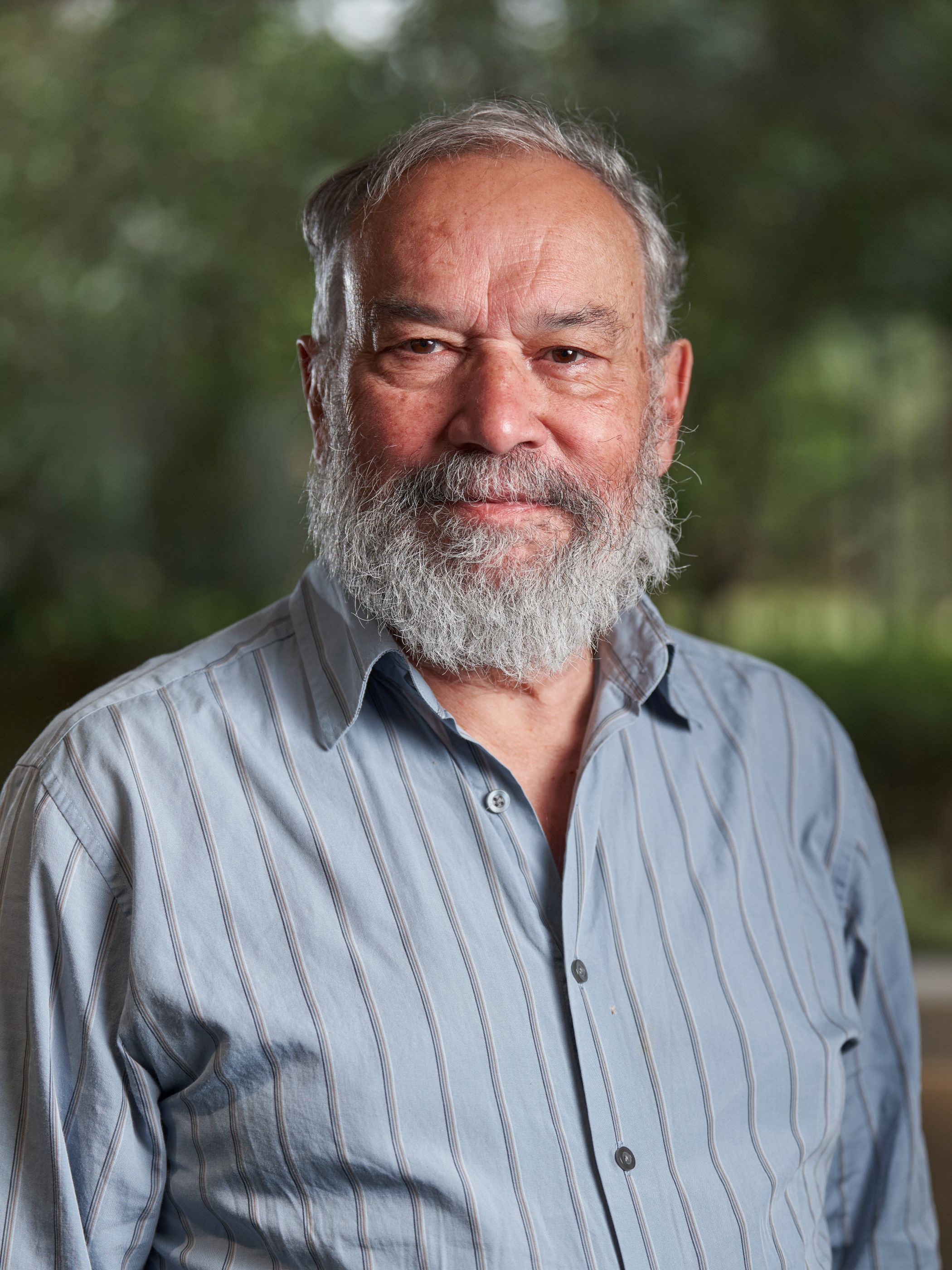
STIAS Fellow, Schalkwyk is with the School of English and Drama at Queen Mary University of London and was joined in the seminar by his colleague, Roux from the Department of English at Stellenbosch University. The pair argue that the chronotope of detention, most often in solitary confinement (with no access to lawyers, subject to interrogation and torture, and with no sense of a release date), is very different from that of imprisonment after trial and produces a different kind of writing.
“We are interested in tracing those differences. Time, in relation to space, depends on the kind of incarceration and at what point in South African history it occurred. All of this affects the writing," Schalkwyk said.
The concept of the chronotope can also be extended to the experience and background of the reader. “This includes Daniel and myself,” said Schalkwyk. “We are looking back from a particular space at earlier writing.”
He explained that in some cases he is rereading books he last read in 2000. “Reading and writing about this in 2026 is very different from 2000 – so I’m dealing with my own chronotope. I’ve also been living abroad for 16 years. And Daniel’s chronotope is very different from mine, so we are mixing and matching.”
Schalkwyk and Roux are writing a monograph that offers a critical, comparative analysis of political writing from prison during the apartheid years, 1948−1995.
Between 1963 and 2021, some 40 books, memoirs and autobiographies were written and subsequently published by people who were detained or imprisoned under apartheid legislation in South Africa. These personal accounts of political incarceration followed repressive legislation from 1963 to 1986 that enacted what Giorgio Agamben (following Karl Schmitt) calls ‘states of exception’. Beginning with the General Laws Amendment Act of 1963, these Acts suspended the usual laws about arrest and trial by permitting what was in effect indefinite detention without trial. By the end of apartheid, an estimated 73 000 people had been detained without trial, tortured and, in some cases, murdered by the security police.
In the seminar, Schalkwyk and Roux gave an illustrated account of the ‘Robben Island Bible’: the copy of Shakespeare’s Collected Works, smuggled onto Robben Island disguised as a ‘Hindu Bible’ by Solly Venkatrathnam, and circulated among the 37 prisoners in Section B (including Nelson Mandela, Govan Mbeki and other political leaders), who marked their favourite passages from Shakespeare with their signatures and the date.
Schalkwyk pointed out that currently there is no full-length monograph on South African prison life. “However, this is not history or political science but literary criticism. We are confining our work to published memoirs, autobiographies and poetry, and using the skills we have to treat them like literary texts.”
Highlighting differences
He also emphasised that the “publications that exist have depicted a certain homogeneity. We want to represent a selection of all the published works by political prisoners incarcerated during apartheid and hope to indicate the complexities, nuances and differences.”
Schalkwyk said they have coined a neologism, derived from mathematics − the homotope − to trace differences within chronotopes of race, gender and class in the representation of prison experience and treatment to provide greater analytical detail.
“Political prisoners were incarcerated in different prisons based on their race and gender: black and Asian male prisoners on Robben Island; white male prisoners largely in Pretoria Local Prison; black women prisoners primarily in Kroonstad Prison; and white women prisoners in Barberton Prison,” he said. “Prison regulations also imposed different diets and uniform regimes according to race. Detainees were held in a variety of prisons and police stations across the country. All of this resulted in huge differences in their experiences.”
The books they are analysing include: Winnie Mandela’s 491 Days (2017); Ruth First’s 117 Days (1965); Fatima Meer’s Prison Diary – One hundred and thirteen days (2001); Emma Mashinini’s Strikes have followed me all my life (1989); John R Schalobersky’s When they came for me (2021); Albie Sach’s The jail diary of Albie Sachs (1966); Hugh Lewin’s Bandiet – Seven years in a South African prison (1974), Bandiet – Out of jail (republished in 2002) and Stone Against the Mirror (2011); Jeremy Cronin’s Inside Apartheid’s Prison (1984) and Inside and Out (1999) – his poetry collection; and, Breyton Breytenbach’s The True Confessions of an Albino Terrorist (1984).
Schalkwyk explained that Lewin’s three versions of his experience make for interesting reading. Stone Against the Mirror was published after the Truth and Reconciliation Commission and included a lot of previously repressed information as well as emphasising the betrayal by another white activist who gave evidence against him.
“Breytenbach is also not easily categorizable,” said Schalkwyk. “He is regarded as one of the finest Afrikaner poets. He was kept in solitary confinement for two years after sentencing and not among other political prisoners for another five years in Pollsmoor Prison.”
They will also include Out of Quatro by Luthando Dyasop (2021), which offers a very different perspective because Quatro was a camp run by the African National Congress in Angola and Dyasop was held there accused of being a traitor.
Explaining some of their choices, Roux noted: “There are multiple cases of how prison life produced subjectivities. We want to move beyond the transcendental which is often the foundation of prison writing. It’s a granular, specific and complicated terrain. The books have been chosen for what they are − self-consciously literary works that address an unknown literary audience.”
They also described some of the emerging themes they have found thus far: “Racism is emerging as a central issue. There was massive discrimination in the treatment of the different races,” said Schalkwyk. “Another example is the sense of community at Robben Island which has been much celebrated but is a bit of a myth. There were large differences among the different factions, especially once the 1976 generation came to the prison. It’s something even Mandela papers over in The Long Walk to Freedom.”
“The white accounts are also different. There were fewer white prisoners. There was a greater sense of tension, perhaps a greater willingness to talk about difficulties in getting on with other people and about the differences of opinion and in habits.”
“In autobiographies in particular you are not just dealing with people’s experience but the representation of their experience,” he added. “There is a distinction between representation and experience – it’s seen from a different eye.”
Article: Michelle Galloway
Photo: Curt Ruiters, Quickclick Productions