
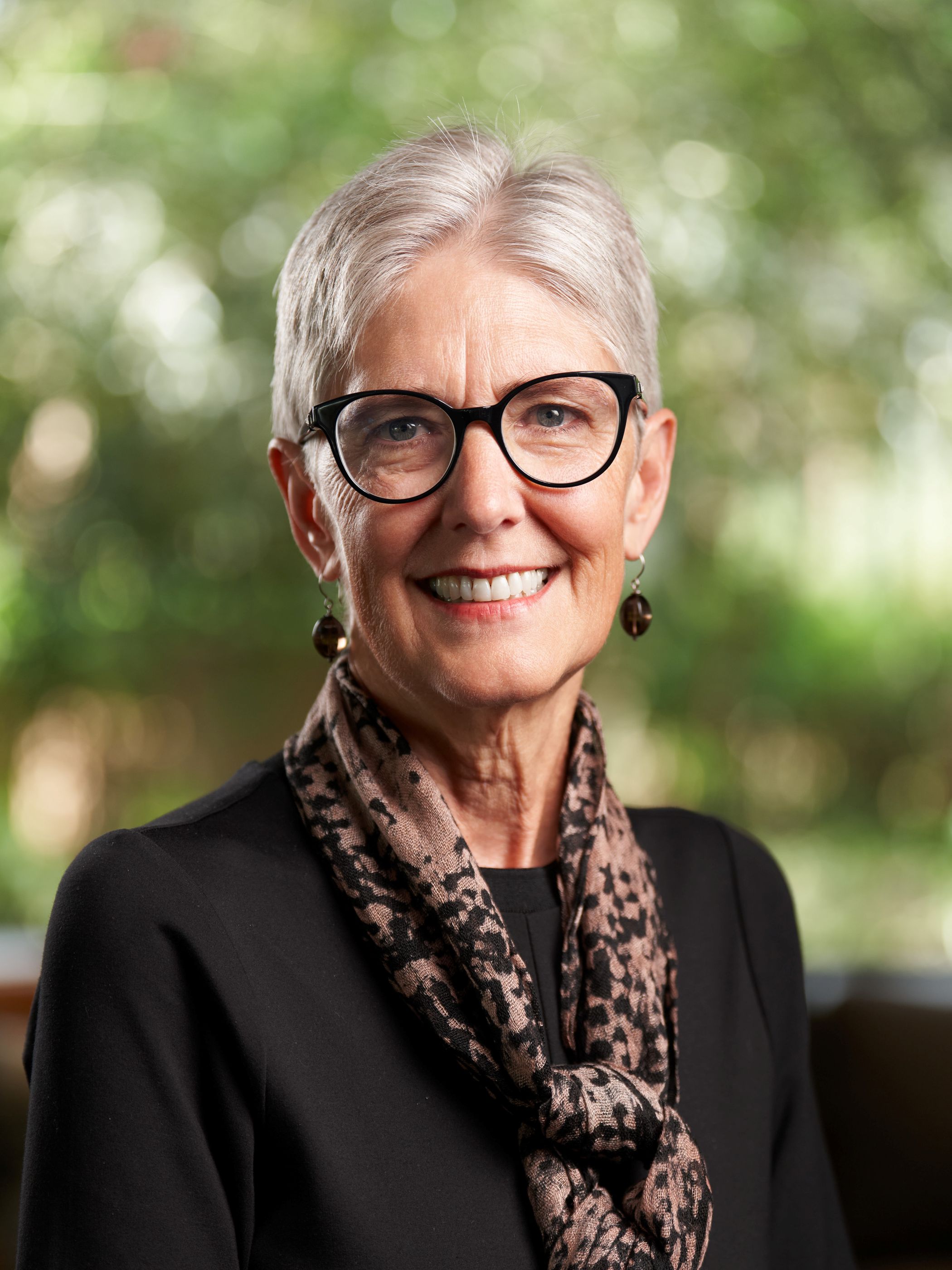
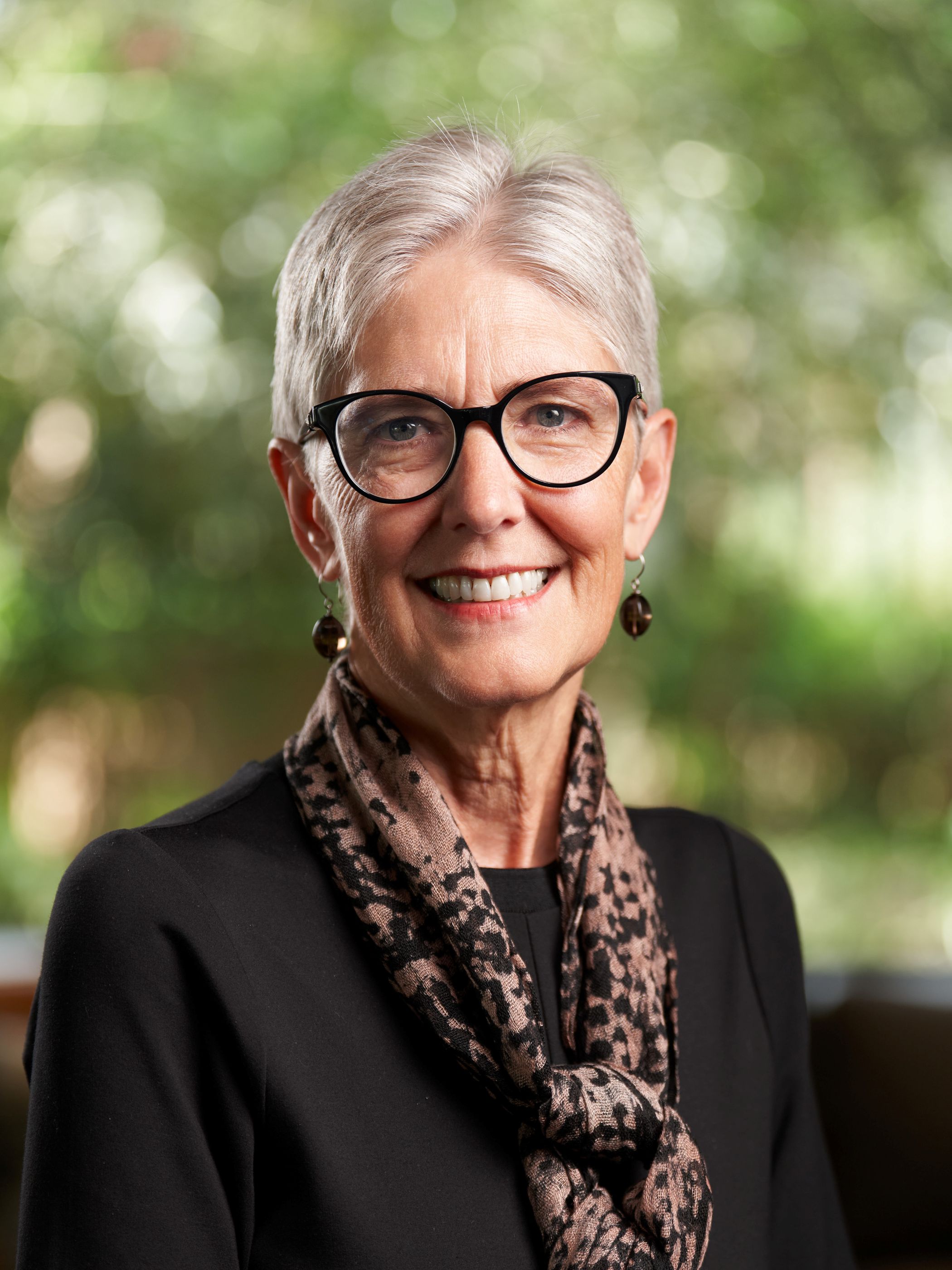
A more nuanced understanding of the experiences and contributions of women cabinet ministers in West Africa is emerging, thanks to ongoing research by STIAS Fellow Gretchen Bauer.
Bauer's book project focuses on The Gambia, Ghana, Liberia, Nigeria and Sierra Leone. It investigates women cabinet ministers’ ‘paths to power,’ interactions with women’s movements, attitudes toward gender parity, perceptions of representation impacts, and experiences of cabinet shuffles.
Bauer is with the Department of Political Science and International Relations at the University of Delaware, USA. Over the past couple of years, she has completed initial interviews with nearly 25 former women cabinet ministers, about five from each country.
The countries were chosen because of their Anglo-American colonial heritage, which has implications for women’s political representation because of the type of ‘woman-unfriendly’ electoral system used in these countries. Furthermore, West Africa has been the locus of military coups and regimes in Africa, which may have negative implications for women in politics. Of the five countries, two are post-conflict, two are post-military, and one is post-dictatorship.
Bauer has a long relationship with and research interest in Africa; she first came to the continent as a Peace Corps Volunteer in Kenya in the early 1980s and spent time in South Africa learning Afrikaans before beginning dissertation research in Namibia in the early 1990s. Since then, she has lived in and conducted research in Namibia, Botswana, Ghana and other countries in West Africa.
In her seminar recently, Bauer spoke of a worldwide gender gap in political empowerment, which is closed by only 22 per cent. But there have been improvements in women’s political empowerment in several African countries, and some countries on the continent are world leaders in women’s representation in parliament (Rwanda) or cabinet (Namibia), she observed.
She cited feminist scholars and gender theorists who argue that the case for gender parity lies in arguments about justice, democracy, women’s interests, role modelling, and the quality of representation. But as so few countries have experienced gender parity in political institutions, the full effects are as yet unknown.
Why women cabinet ministers? Because there has been scant research on women cabinet ministers in Africa, and limited data sources make research challenging. At the same time, appointments to cabinets and the work of ministers are worthy of investigation given that cabinet ministers may hold significant political power, set government agendas, and influence public policy.
Bauer takes an interpretative approach that relies upon descriptive research, a feminist theoretical framework, and thematic analysis. Her data include primarily semi-structured, in-depth interviews, supplemented by other published interviews, memoirs and autobiographies, news reports, and the secondary literature.
She interviewed former women cabinet ministers, rather than those currently in office, because the former ministers are likely to be more available, more candid, more reflective, and less partisan. While she has visited the countries in which the women ministers served, most of the interviews were conducted via Zoom.
Thematic analysis
Bauer’s thematic analysis thus far is divided into four issue areas, namely:
- paths to power
- attitudes to gender parity
- perceptions of representation impacts; and
- experiences of cabinet reshuffles.
Citing specific examples, Bauer highlighted some of her findings in each area.
Globally, paths to power are strongly influenced by the feminisation of politics, regime type, institutional factors, donor impact, recruitment method, accommodation of politicised ethnicities, and gender balanced decision-making norms, among others.
While ‘belonging to a political family’ can be a route to power for some women globally, these women’s experiences reveal a different understanding of political families. Some women cabinet ministers may have had distant relatives involved in politics, but it was more likely that they had other connections to politics, for example, family members who are impactful community leaders. A number were influenced by their mothers who worked behind the scenes as community mobilisers for political campaigns. Their work in grassroots politics inspired their daughters to later enter formal politics.
Fathers who strongly supported daughters were also a dominant theme from Bauer’s interviews, and she cited several examples. This finding has also been confirmed among interviews with women judges across the African continent.
She also noted that war and conflict, in part because of the way in which they disrupt gender relations, may contribute to bringing more women into politics. For example, several former women cabinet ministers had left Liberia and Sierra Leone during war years, only to return later to take up leadership positions, having gained considerable education and training outside. This happened in other African countries like Namibia and South Africa decades ago. The women ministers took that training and expertise to their ministerial portfolios. This is consistent with literature that shows that women are more likely to be appointed to cabinets when ‘specialist’ skills are taken into consideration, rather than ‘generalist’ political background.
In terms of gender parity, globally there is an increasing number of countries with gender parity parliaments and gender parity cabinets, including in Africa. At the same time, women ministers continue to be assigned to ‘soft’ or ‘outer’ portfolios like education, health, culture, tourism, and gender affairs, while men lead the ‘hard’ or ‘inner’ ministries like defence, justice, foreign affairs, and finance, though this is changing.
While the women ministers Bauer interviewed were committed to more women in cabinets, they had little influence over cabinet appointments. Instead, they focused their efforts on where they could bring more women into leadership positions, namely, their own ministries. The women ministers recounted specific examples of elevating women into leadership, for example, a foreign affairs minister appointing more women ambassadors.
On representation impacts, Bauer probed the women’s perceptions of their symbolic and substantive representation impacts while serving as ministers. Around the world, the literature on representation impacts for women cabinet ministers (and women members of parliament) is quite clear that women in politics are likely to represent women’s interests, for example, in areas like family law, land reform, or gender-based violence.
In her interviews with the women ministers, Bauer found that nearly all claimed a large role modelling impact on women and girls inside and outside their countries (a symbolic representation impact). Also, many pointed to the non-legislative ways in which they served women’s interests (substantive representation impacts), for example, in facilitating improvements to transport infrastructure for market women, or access to schools for girls.
With regard to experiences of cabinet reshuffles, Bauer looked at how likely the women ministers were to be shuffled into or out of cabinet. Such reshuffles are often used for silent makeovers of incumbent governments and tend to be events much watched by the public and media alike. As with other issue areas, there is less research on cabinet reshuffles in Africa than in other parts of the world.
The women ministers Bauer interviewed understood clearly that ministers serve at the pleasure of the president, that presidents may appoint you on one day and remove you the next day. Many of the women ministers interviewed were often offered opportunities elsewhere in government, if they were reshuffled out of cabinet. Most of the women ministers indicated strongly that they had valued the opportunity to serve their country and expressed gratitude for their terms in office.
Indeed, many of the women ministers had come from civil society before entering politics. From there, they realised the power and even necessity of serving in political office to be able to influence policy. They strongly stated that, during their time as cabinet ministers, they were ‘working for the people’ and serving their countries.
Bauer highlighted some recent challenges for women in politics: first, the issue of autocratic gender washing – where autocrats take credit for advances in gender equality to turn attention away from non-democratic practices. Second, the issue of violence against women in politics that has emerged as a backlash against women’s increasing presence in politics. Such violence may discourage women from standing for political office in the first place or diminish their experiences once in political office.
The seminar presented work in progress that still awaits more interviews, as well as the potential addition of issue areas, such as interactions with women’s movements and women members of parliament.
Article: Michelle Galloway
Picture: Curt Ruiters, Quickclick Productions