
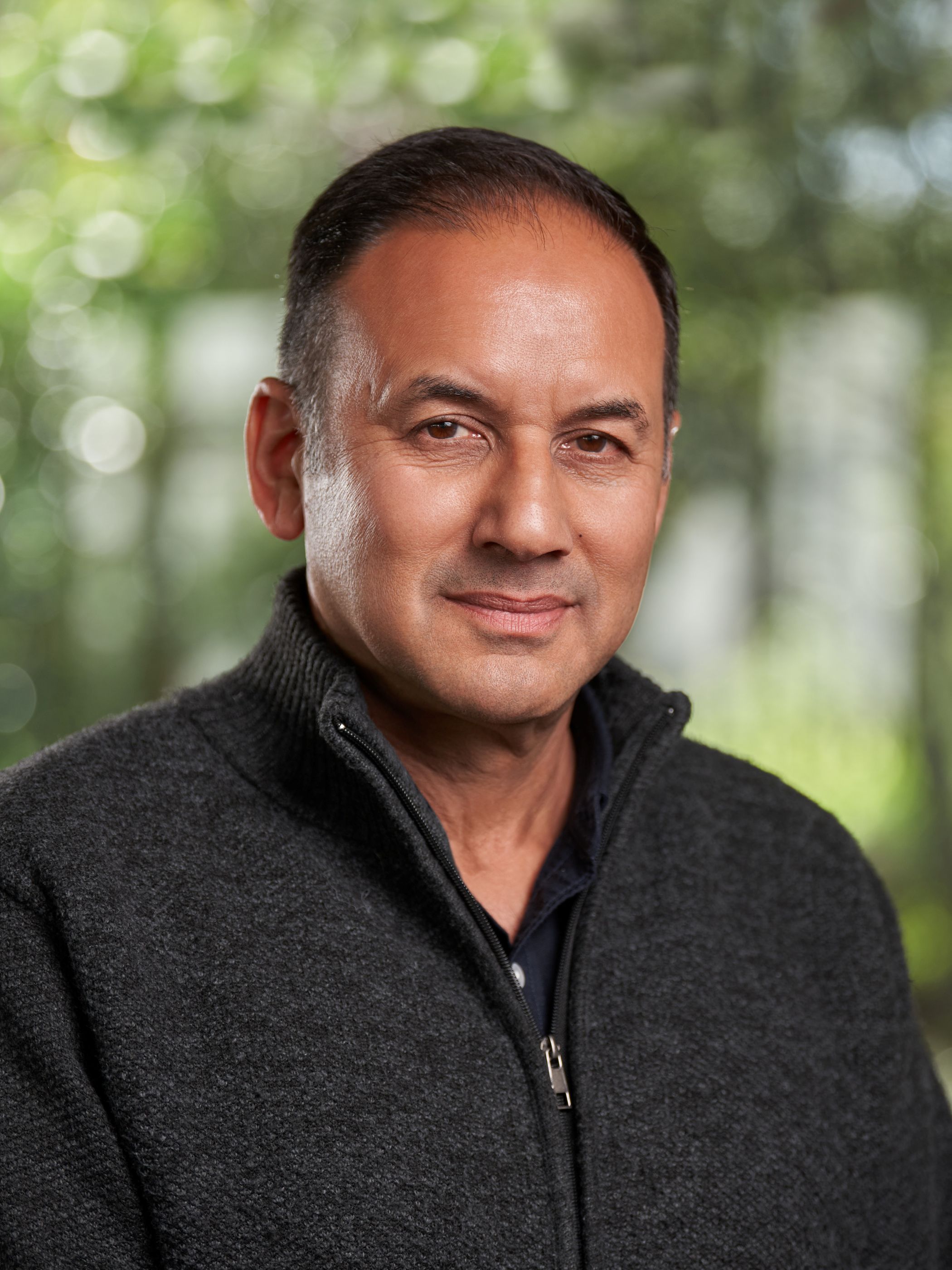
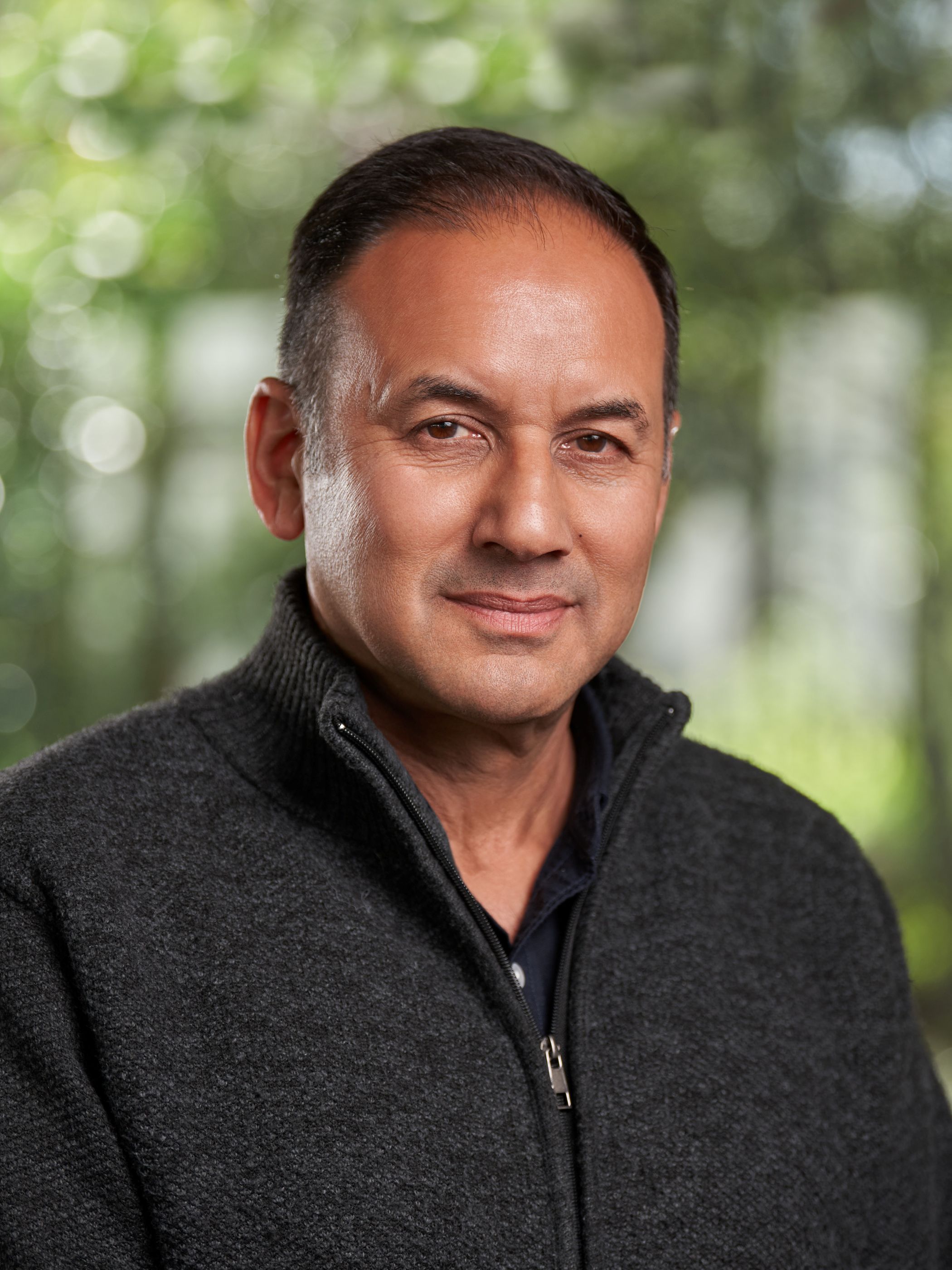
Ashraf Kagee’s book project will examine the relationship between psychology, ideology and power, exploring how the discipline has been constituted in the context of political forces, in ways that are neither neutral nor benign.
In his seminar, Kagee, based in the Department of Psychology at Stellenbosch University, examined psychology's complicity with oppression and discussed liberation psychology as a counter-tradition rooted in the lived experience of the oppressed and oriented toward critical consciousness and social transformation.
“For this seminar I’m reflecting on the broader epistemological questions about psychological constructs, including diagnostic categories as socially constructed ideas shaped by power and ideology rather than as natural or neutral categories,” he explained. “The diagnostic category of post-traumatic stress disorder has always been controversial. Thus, I explore how shifting historical attitudes influence constructs of pathology and traumatic stress. I also consider the extent to which a Western, individualised diagnostic framework adequately captures collective and historical experiences of trauma such as colonial violence, apartheid and genocide.”
“I’m looking at the caveats and pitfalls of psychology and why it’s worth our while to bother with psychology as well as calling attention to the politics of mental-health conditions.”
Psychology for harm
Kagee pointed to the long history of the use of psychological testing as the basis for harm. He highlighted Francis Galton − British polymath, statistician and founder of eugenics. Galton pioneered statistical concepts such as regression to the mean and correlation, established the first systematic mental tests, and founded psychometrics and differential psychology. In 1883, he coined the term eugenics.
“The psychometric movement intended to show humans could be bred for desirable attributes like intelligence and argued that selective breeding could occur across races and classes,” explained Kagee. “People could be bred out. White people were more desirable, and the intellectually gifted and able-bodied more valuable. The science of eugenics could be used to improve the stock of people inhabiting the world. So seemingly objective science was marshalled in pursuit of supremacy.”
This had many implications, including immigration quotas and marriage bans, and sterilising people with disabilities and those deemed feeble-minded – an estimated 60 000 people were sterilised in the US alone.
And, of course, at its worst, eugenics was used as justification for the Holocaust, other genocides and apartheid in South Africa “where psychometric testing biased against coloured, black and Indian people was used as evidence of intellectual and social inferiority to exclude from education and jobs, and to marshal white supremacy.”
“Eventually eugenics was discredited, but the statistical tests and psychometric theory are still in use,” said Kagee. “The history of psychology has roots in white supremacy and the supremacy of able-bodied over those with special needs.”
Kagee also noted the role of psychological associations such as the American Psychological Association, which has close ties to the US Department of Defence and is believed to have provided theoretical cover for some of the torture abuses carried out at Guantánamo Bay and Abu Ghraib.
He emphasised that psychological associations still often support some groups over others, for example, remaining silent on the trauma being inflicted on Palestinians in Gaza while offering statements of support for Ukraine. “Their work is often not benign or neutral but implicit.”
Turning to research, Kagee noted the need for a trusted evidence base to inform psychological knowledge. “However, traditional research sees data as supreme and objective, but scientific questions are imbued with history, politics and biases, and influenced by the personal backgrounds of researchers. They are not politically innocent or ideologically neutral. The way research is conceptualised is influenced by positionality. We must be able to interrogate the gaze with which we approach research and apply a critical lens to dominant assumptions.”
“Epistemology seeks to ask how we construct knowledge, how we know what we know. All data are not equal, and data do not speak for themselves. There is a need for researchers not only to focus on research findings but also the epistemological assumptions underpinning them.”
He emphasised that all psychological research and diagnoses are based on social constructs influenced by social and cultural values. As one example, he pointed out that homosexuality was regarded as a mental disorder until 1973.
“This reflects cultural values and vested interests. Conditions don’t have physical properties; meaning is negotiated and imbued by the prevailing power structure.”
But he added that he is not rejecting the diagnostic manuals, which are needed but are located in a political, cultural and social context and are a product of that context. “There are other conversations that can be had about how to frame mental-health problems and conditions.”
Trauma and PTSD
Focusing in detail on trauma and post-traumatic stress disorder, Kagee noted that PTSD was first included in diagnostic manuals in 1980. The original definition focused on psychologically distressing events outside of normal human experience with the emphasis on the person’s response, not the event itself. It was seen as a disorder of memory with medical symptoms for which treatment was indicated.
However, Kagee pointed out that this means that people are often pathologised and medicalised for broader political and human-rights problems.
“There is also an assumption of a universal human response to events,” he explained. “It potentially comes at the expense of other indigenous and localised ways of making sense of and dealing with things.”
“People do experience traumatisation, but to focus only on diagnostic criteria is reductionist and needs more nuance.”
He also emphasised the need to focus not only on discrete events but on historical traumas – “intergenerational experiences of oppression, subjugation and extreme violence that are both structural and physical. Trauma is a political, economic and social phenomenon not only a psychological experience that exists in the heads of people.”
“I have trained psychologists in Gaza,” he added. “Most survivors are traumatised. There is major depression and trauma. Civilians need to be protected. There must be investment in mental health, in safe spaces. Mental health must remain central and fully integrated. The current genocide is an extension of trauma of several decades. We cannot simply regard the whole population as having a mental-health condition, but it is also inappropriate to dismiss symptoms. It needs a nuanced approach.”
Liberation Psychology
“In his biography of Franz Fanon, clinical psychologist Hussein Bulhan compared Fanon and Hendrik Verwoerd, pointing out that they were at the opposite ends of the spectrum in terms of ideology, race, etc., yet both trained in the field of mental health and human behaviour,” said Kagee.
He explained that Verwoerd was the chief architect of apartheid, whereas Fanon theorised about using psychology to improve the human condition, ameliorate mental-health conditions, relieve emotional distress and enhance quality of life. “He highlighted psychological practice as something that could offer liberatory potential and create conditions to overcome circumstances of oppression.”
The key figures of Liberation Psychology are Fanon and Brazilian philosopher Paolo Freire, who argue that psychology is Eurocentric and not embedded in the real experiences of indigenous people. “It should be used to solve problems of the poor and oppressed, not privileged social classes and should be part of the lived experience of those on the receiving end of colonial oppression,” said Kagee. “This includes the potential to participate in social movements and in the broadened development of critical consciousness.”
“Steve Biko also wrote about the psychological liberation of people and about how colonisation influenced how people appraise reality and their role in society. He tried to have oppressed people liberate their minds.”
“I believe that psychology can contribute to liberation but, of course, it needs to be alongside many other things,” he added.
“My overall message is that scientific data are not ideologically neutral. Ideology influences how we think about research questions. In this book I’m engaging with how to integrate empirical science, social constructivism and the psychology of liberation.”
In answer to a question, he said: “Psychology doesn’t need to be saved. But I’m trying to find ways to integrate the various discourses in psychology with conversations on decoloniality and liberation – asking: can they be integrated, or can we live with contradictions and paradoxes? Of course, we need diagnostic criteria and sometimes have to reduce people to numbers to do research, but we need to understand that numbers come from somewhere and are underlined by ontological assumptions. I would want an intellectual path that integrates different discourses and yields data and knowledge that can help and improve people’s experiences.”
Article: Michelle Galloway
Picture: Curt Ruiters, Quickclick Productions