
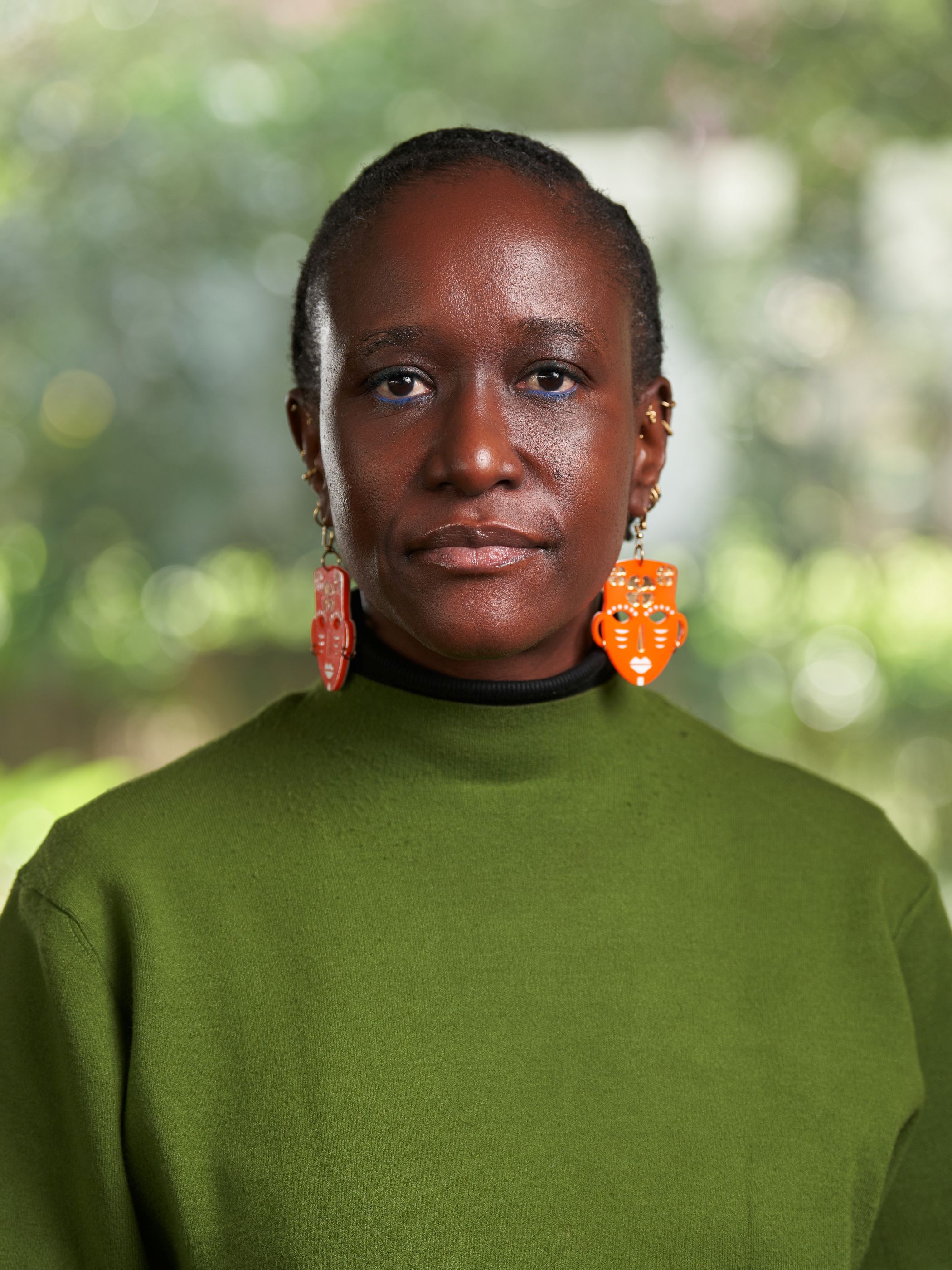
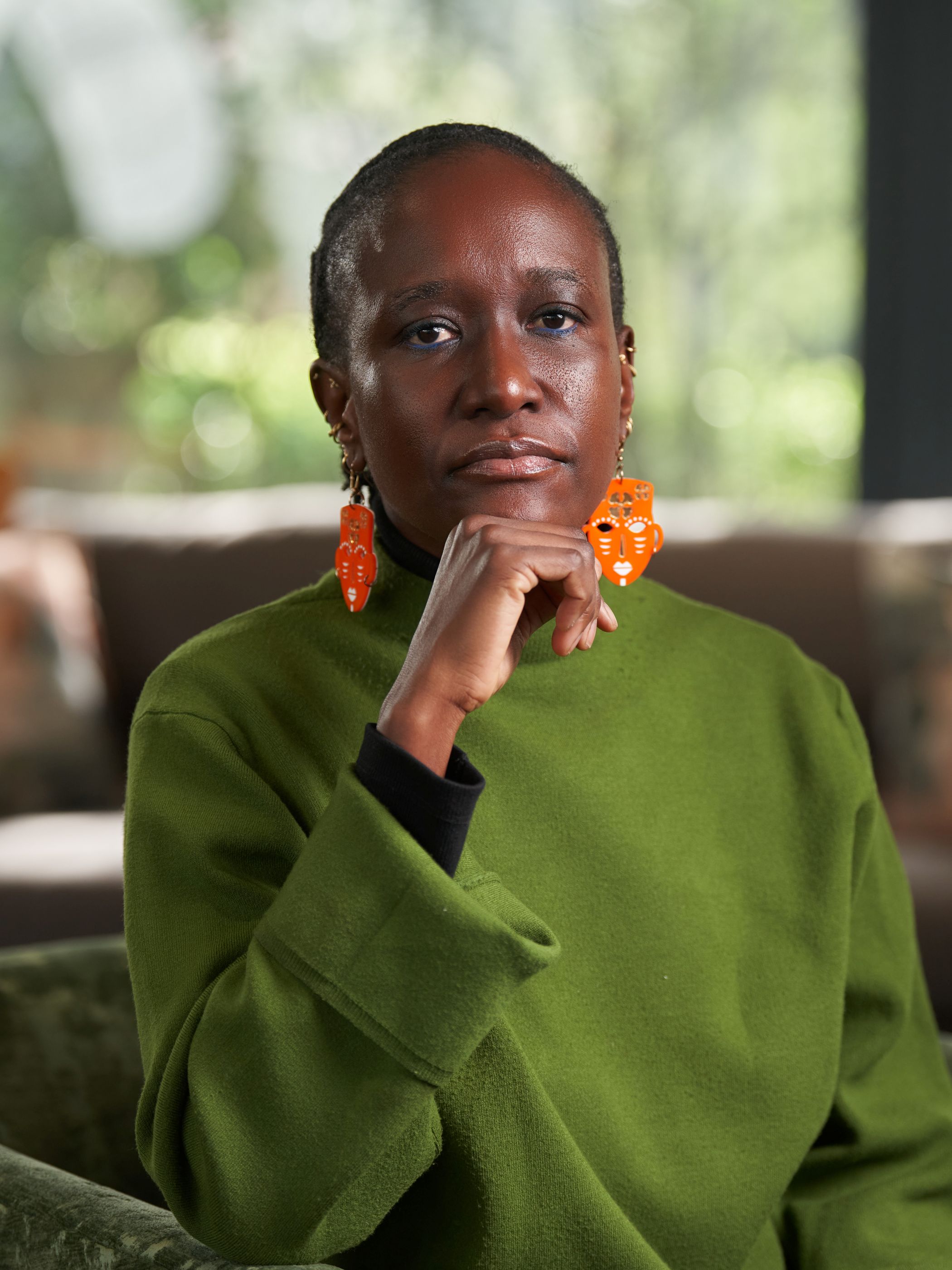
Iso Lomso fellow, Uhuru Phalafala’s book project investigates the terrains of the subterranean to attune to sound knowledges historically buried, submerged, silenced and rendered out of sight by settler colonialism and epistemicide.
Phalafala is with the English Department at Stellenbosch University and in her fellows' seminar presented a chapter that navigates Xamissa as what Roussouw (2018) described as ‘water archives’ of marginalised histories, cosmologies, languages, lineages of knowledge, aesthetics, memories, desires and resistance. Xamissa refers to the subterranean waters streaming down the Western Front of the Hoerikwaggo (Table Mountain) into the underground of the city of Cape Town.
“I’m aiming to give an alternative reading,” she said.
“Cape Town is a post-slavery society. When we position it as such, we rupture its posturing as a white utopia and as a part of Europe. Cape Town is a city that has allowed the dispossession of indigenous people for over four centuries. Even the 2010 soccer World Cup turned the Bo Kaap into a European outpost, and since COVID in 2020, the rise of digital nomads is again pushing the locals out of the city bowl. Similarly to other post-slavery societies, it’s a city still marked with the deep wounds of white supremacy, sexual violence and hierarchies of oppression,” Phalafala said.
Her presentation was liberally peppered with art and literary works including Sthembile Msezane’s installation – A rain of a weeping river, which depicts the cloud formation over Table Mountain; Kyle Shepherd’s album South African History !X; Henk Rossouw’s book Xamissa: The Water Archives; Toni Stuart’s poem The Woman Speaks; Malika Ndlovu’s poem Lydia in the Wind; Ashraf Kagee’s novel Song of the Slave Girl; and, Berni Searle’s video installation Subterfuge.
Through multisensorial and intertextual reading practices − attending to sonic, visual and literary works, Phalafala hopes to develop a vocabulary for listening to alternative modernities and subterranean cultures as they haunt the present and open futures: a politics and poetics of hydro-relationship, repair and reworlding in the Cape.
Living waters
She explained that the waters of Xamissa, like those who inhabited its banks, were not always underground; Dutch settlers pushed back the ocean and constructed Heerengracht – the master’s canal – and channelled the streams and rivers running down Hoerikwaggo into a network of canals. Later, British settlers built over those canals, sending the sweet fresh waters under the city’s cobbled and tarred roads, straight into the sea. “This reduced access to water for indigenous populations, and the sweet water moved underground like people and cultures.”
“We read the living waters of Xamissa to listen for that which was also ‘tamed’ and forced underground into the subterranean of Cape Town’s surface: the enslaved and enserfed indigenous populations who produced what Gabeba Baderoon described as ‘a modernity crafted outside of the dominant order of the slave-owning society at the Cape’.”
Phalafala explained that under the city of Cape Town is a story of a people who have been mythologised and buried. These enslaved populations produced cultures and lineages of knowledge buried by colonial worldmaking.
“Attending to the living waters that run underground, Cape Town enables a different positionality from which to listen to what Hofmeyr described as ‘alternative modernities’, a buried heritage whose fluidity, motions, flows and itineraries over different hydrological cycles continue to haunt the present,” she said.
“These iterant subterranean waters generate potent imaginaries in contemporary texts – visual, literary and sonic by descendants of these submerged modernities, who align and relate with Xamissa as a site for politics and poetics of resistance and resilience. I listen for multiple subjects and locations of Cape histories in these waters, for variegated temporalities and modes of encounter beyond the colonial archive and imagination.”
Theorising the subterranean, she believes, can help us move away from the earthlessness of cartography and colonial worldmaking; the primacy of observation and the ocular, the idea of the surface of the earth as reality, and, most importantly, from mono-humanism.
She explained that through cartography the world was represented as knowable, mapped and named, and the earth as the surface on which humans make meaning and reality. Observation was used to make sense of the world, but the ocular also produced the science of racialisation.
“Naming is another praxis of world making,” she said. “For example, the Khoisan call Table Mountain ‘The mountain that rises from the sea’ while the settlers named it using only ocular perception. But it only resembles a table from the city bowl, from where we cannot see the glaring inequalities. This reduces the mountain to a physicality, a surface to mount and peak.”
She also referred to the linear progression of time, divorced from the past and future and the “colonial containment of beings and reality onto a surface devoid of relations with the celestial and subterranean worlds.”
“I’m interested in the unpredictable emergences – the subterranean disrupting the world order, the disordered operations that redirect the flow of time and history, and the lived histories and cultures buried in oceans and underground producing insurgent ecologies of being.”
“It’s about surfacing contested histories and futures,” she said. “Cape Town reality has been made to suit the tourist brochure in a suffocating act of silencing, gagging and waterboarding.”
“Local populations were pushed into exploitive labour which destroyed their life world,” she added. “Mass graves emerge whenever a new building is built. History and people are buried beneath the rubble.”
‘We need to restore this history as a reparative act.”
Kitchen convergences
As part of the chapter, Phalafala will investigate a well in the oldest kitchen in the Castle of Good Hope. She explained that “It continues to run crystal clear, still bearing witness to all that has gone before”. But she also sees this as being about the convergence with the colonial heritage – the kitchen was a site of hierarchies and intimacies, of creolisation and communication – a contact zone that necessitated a new language.
“The act of cooking and ingesting spices disrupts the neat surfaces of the castle. Stewing, fermenting and alchemising, symbolically ingesting histories and stories. The kitchen is a site of fugitivity, of trafficking other languages and cultures, of insurgent ecologies of being. Where the enslaved and indigenous are in kinship.”
“And, where it is impossible to seek discrete identities.”
“The kitchen shapes the culture of the surface – producing alternative modalities through spices and other spiritual practices ingested in the food,” she added. “There is no hermetically sealed Cape identity. It’s no utopia or European outpost.”
“Cape Town won’t be a discrete surface that conceals, buries and obfuscates its histories. The buried will always haunt, surfacing these histories with an intermittent need to disrupt the flow of history as linear. Xamissa engages in hydrolic citizenship where people are cleansed, nourished, healed and reborn to upset the city’s logics.”
“We must go deeper than the surface of what Cape Town purports to be. Resistance unworlds that world and reworlds it. It imagines new ways of inhabiting the world, even if momentarily. We talk about being at the end of the world, and new worlds must be imagined. We need poets and artists to reimagine that. They are the first respondents making work in response to the times. Art is essential and has qualities of healing, repair and making you feel differently about yourself.”
“This will be an exploration of two worlds – the actual and the possible – Xamissa and Cape Town,” she concluded. “I aim to chart the way into imagination and a different sense of place. Xamissa in Cape Town, Xamissa as Cape Town, Xamissa as a future memory of the Cape.”
Article: Michelle Galloway
Photo: Curt Ruiters, Quickclick Productions