
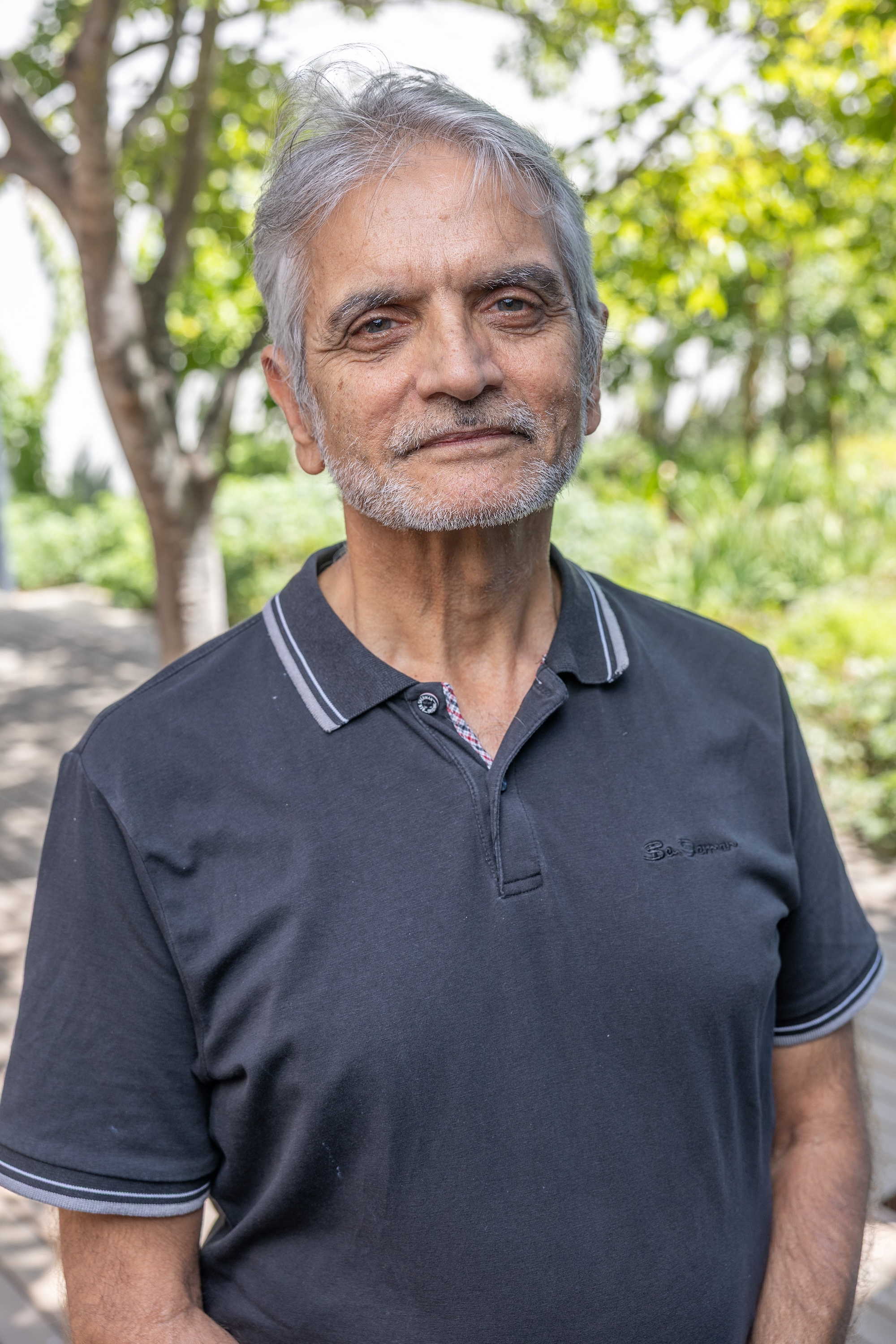
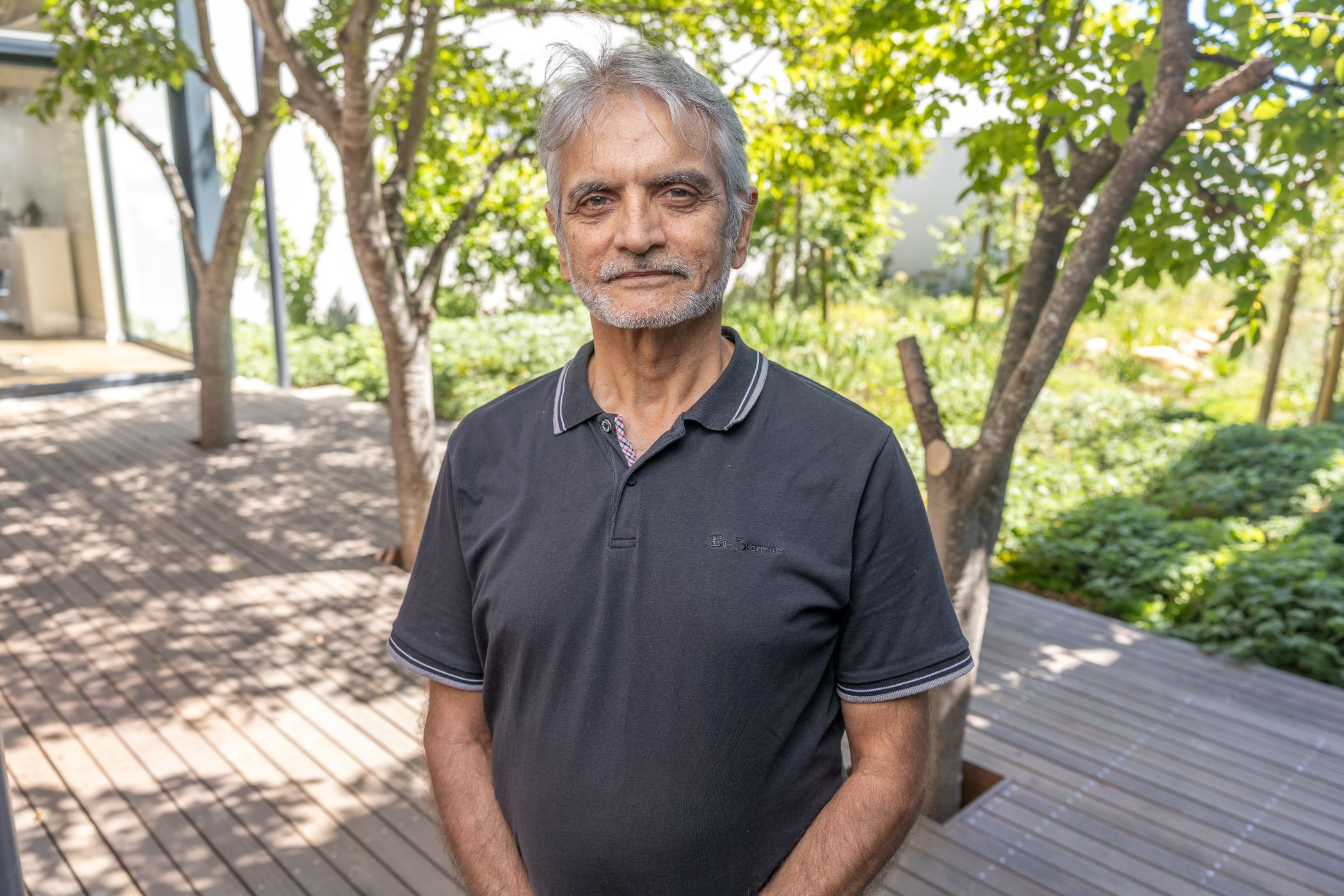
“STIAS has given us a gift with no requirement to deliver anything, but that might mean we are indebted to STIAS forever,” Emeritus Research Fellow at the University of Cape Town, Abdulkader Tayob, jested, referring to some long-term implications of gift economies.
Tayob is working on a book project exploring two main questions: Are moral economies possible in market societies? And are religious archives helpful in showing how moral economies may be thought of and practised?
“There have only been a few studies on religion and moral economies,” he said. “In my project, I’m wondering how we can draw inspiration from a different place – namely, Islamic archives and traditions. The term moral economy is not necessarily present in this archive, but there are many deliberations on sustenance and livelihoods through which it can be recognised," he said.
He noted that the term ‘moral economy’ first appeared in Christian theology in the sixteenth century.
French sociologist and anthropologist Marcel Mauss was renowned for his seminal work The Gift (1925), in which he introduced the concept of ‘gift exchange' to describe exchanges that bind economic, legal, religious, and moral life. Mauss also indicated that gift economies were coming under sustained pressure in the face of a globalising capitalist market economy.
English historian and activist E.P. Thompson used the term ‘moral economy’ to refer to the English bread riots and other protests in response to new policies on rising grain and break prices in the 18th century. Thompson argued that the riots were motivated by values and agreed-upon practices: “the men and women in the crowd were informed by the belief that they were defending traditional rights or customs; and, in general, that they were supported by the wider consensus of the community (Thompson 1971:78).
More recently, American anthropologist, anarchist and activist David Graeber wrote about the existence of class-based gift economies in which the very rich shared gifts with one another.
“From the 1980s onwards, there was a further extension of market logic to all sectors of society,” said Tayob. “As ideas of the market economy spread, moral economies were pushed into the shadows.”
His seminar presentation offered a vision of a moral economy rooted in the intellectual archive of Islam.
Pillars of sustenance
Tayob highlighted the work of Abd al-Rahman Ibn Khaldun, the 14th-century historian and philosopher (1332 – 1406), who may arguably be described as a moral economy inspired by religion. “Ibn Khaldun,” said Tayob, “wrote a 16-volume work on world history that ended with his autobiography. Apart from his obvious sense of self-importance, Ibn Khaldun was famous for being one of the first to introduce the philosophy of history by thinking of the nature of society in the same way that one thinks of the nature of an object.”
“Ibn Khaldun’s analysis of the sources of livelihood (fī al-maʿāsh wa wujūhuh) offers a rich account of human economies. He articulates a historical and sociological analysis of economic practices in which he inserts an ethical set of questions and aspirations. The balance between history and ethics in his work offers a way of thinking about a moral economy.”
Tayob explained that in the introduction to world history, Ibn Khaldun presents two pillars that supported humans acquiring sustenance: (1) rizq, referring to divine sustenance and (2) kasb, referring to human effort. Rizq and kasb were dynamic and applied to wealth that was acquired through gifting and human labour.
Practically, rizq and kasb are acquired through various forms that Ibn Khaldun identifies as natural and non-natural. Agriculture, trading and craftmanship are natural means of acquiring sustenance, while predicting the location of buried treasures through divination was not. Ibn Khaldun used the pair natural and non-natural to analyse the economic activity historically and sociologically. But he went one step further and suggested that acquiring a livelihood should also produce an ethical subject. He said, for example, that trading may be a natural form but injurious to the ethical development of the self, in some cases.
“With such ideas from the intellectual tradition of Islam, I want to write about existing moral economies in Africa,” continued Tayob. “I have identified five sites across the African continent for this project: charitable giving in Durban (South Africa), public endowments (waqf) in Zanzibar, kofia (hat)-making in Mombasa (Kenya), olive farming in Msaken (Tunisia), and trading in Nima (Ghana).”
Going into more detail in hat-making in Mombasa, Tayob said: “I’m interested in understanding kofia-making as a moral economy.” Tayob explained that kofias were traditionally made by women for their sons, husbands, and fathers. From the 1990s, the practice was transformed into a regional economy as unemployment increased in the coastal regions of Kenya. The making and wearing of the kofia was popularised beyond the home. This led to the development of new styles as demand, taste and price were transformed. All the while, the making of the kofia included rural villages in this new economy.
But there were also some challenges. Not everyone agreed that wearing a kofia was an essential part of Muslim life. But this did not limit the popularity of the kofia. On the other hand, the threat of a manufactured kofia made in China or with Chinese machines posed a potential challenge. But Tayob concluded from his research that kofia in Lamu (an island town off the northern coast of Kenya) were easily identified and treasured for their craftsmanship and appeal.
Article: Michelle Galloway
Photo: Ignus Dreyer, SCPS Photos