
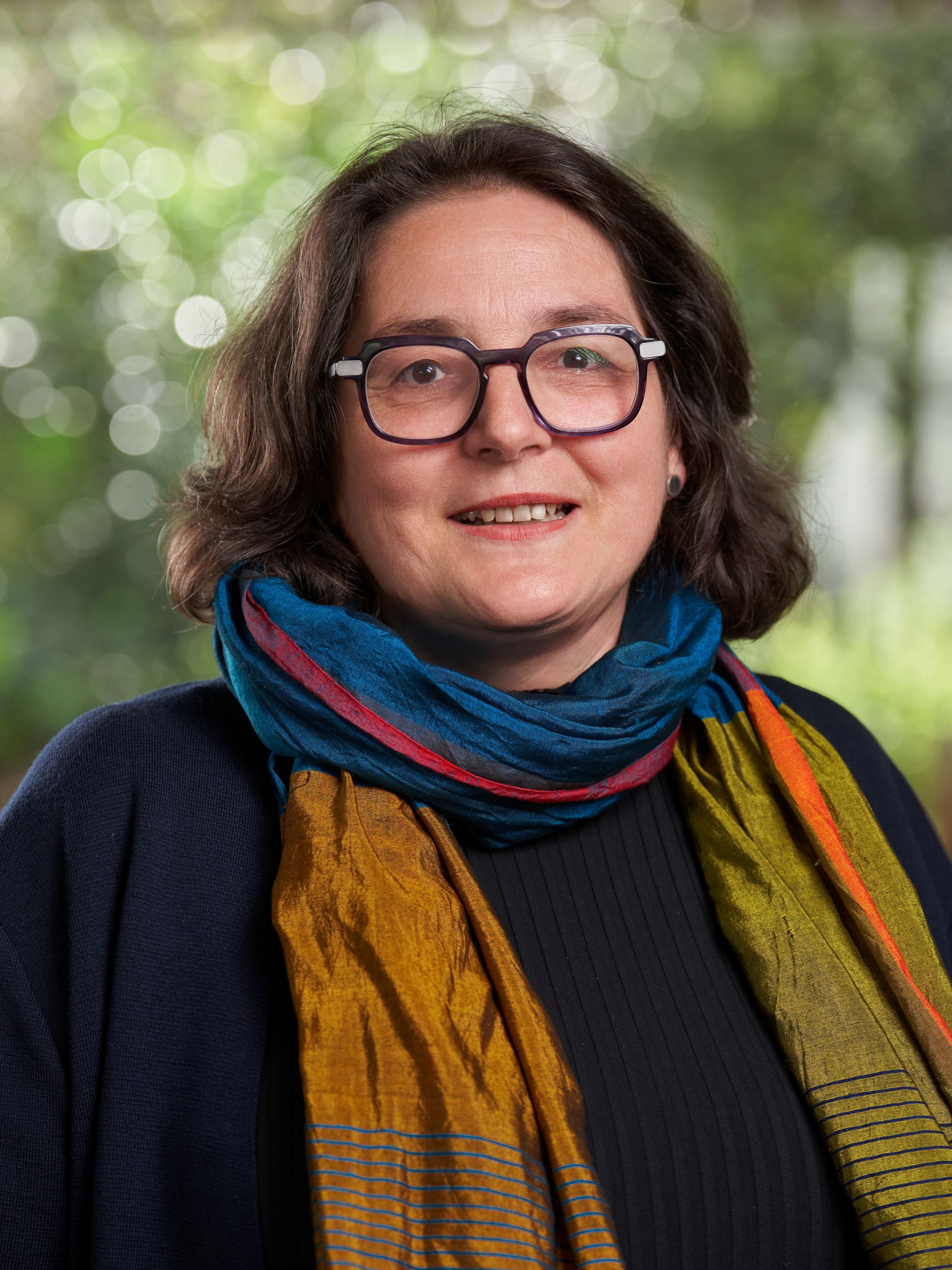
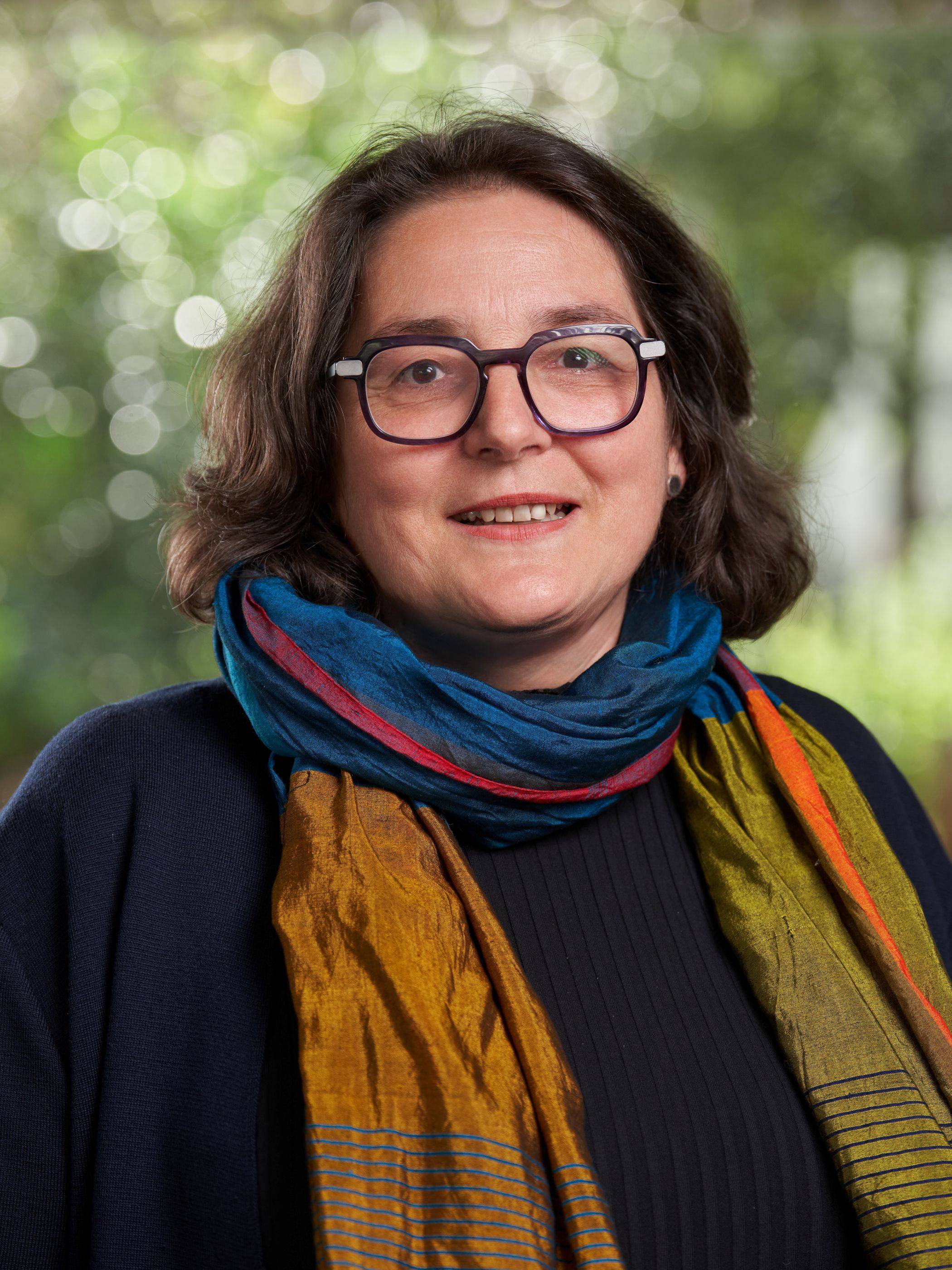
How does the introduction of technologies change human-water relations as an everyday life experience? This is one of the questions at the centre of Ina Dietzsch’s research interest.
She is trying to understand the very complex arena of the digitalisation of water and what it may mean to people in different parts of the world.
Building on the assumption that the everyday experience and daily use of water is as diverse as how people talk about and relate to water, her research focuses on what she calls ‘digital water’: the introduction of digital technologies for ordering and managing water and people; and for counting and calculating water use.
Dietzsch is with the Institute for Critical Research in Culture and History at Marburg University, Germany, where she explores the migratory movements of technologies and follows the introduction of smart water metering in Europe (Switzerland and Germany) and Africa (South Africa, Botswana and Tunisia), closely observing the transformation of water issues, water narratives and water practices.
In her Fellow’s seminar, Dietzsch highlighted concepts from the social sciences and humanities that attempt to explain what water is.
“It’s taken for granted that by water we mean the same thing. But it’s not a uniform entity and demands different action. This is overlooked when dealing within a shared commonsense of water as part of a nature separate from humans and water as a natural resource available for use and exploitation,” she said.
She explained that in 2010, anthropologists Ben Orlove and Steven Caton proposed studying water as a total social fact which, because it is found everywhere in societies, manifested in all kinds of social institutions. In 2016, Veronica Strang and Franz Krause suggested that people think about relationships through water and treat water as something produced through social relationships and imbued with meaning through cultural schemes.
However, the assumption that water is part of a single, universal nature that is everywhere and always the same has been repeatedly challenged in cultural anthropology and other disciplines. This has led to research, including her own, which deals with ontological multiplicity and allows for the creation of a framework of differently connected worlds and ways of being.
Relating water to data
“The moral of the story is that we can’t avoid digitalisation completely or go back in time, but if you introduce digital technology in the water sector, you must do it with care. And care can mean something different in different contexts. It’s important to understand questions of ownership, what the future perspectives are and what care can mean in a different context,” she said.
“Water meters exemplify paradigmatically how modern water structures human-water relations in a specific manner. They transform physical properties of water into numerical values and make water connectable to market prices. Smart water meters change this fundamentally by enabling the monitoring of consumption behaviour and social relationships via computational processes,” she said.
She said her work with colleagues in Botswana and Cape Town has shown different reactions to water metering from those in Europe. Botswana is an interesting case study because it has just introduced smart meters.
“Working with water diaries is allowing us to explore some of the cultural implications of the introduction of smart metering,” she said. “Smart metering has been introduced systematically in Gaborone since 2025, and they have rolled out about 40 000 meters. This is presented initially in media interviews as a ’symbol of hope’ and ’beacon of excellence at a critical juncture when water conservation is more crucial than ever’.”
Findings from exploratory work with students from the University of Botswana suggest that technologically fluent people feel the meters give them more control. In contrast, those who are not may be confused, find the technology unreliable and are more likely to miss notifications and experience water cut-offs.
“People are harmed not because water is absent but because technology inserts itself between them and water. There may be non-functional communication systems, a failure of technological assistance and financial and technological barriers that prevent people from using the meters.”
In addition to the water itself, there is also the issue of the data derived from smart systems. Dietzsch wants to understand what that data is, why water data matters, and what future problems a data deluge might bring.
“You can ‘data-ify’ everything in the water business. But what is the purpose? There needs to be responsible management of data and ownership. And it’s important that those from whom the data are drawn have some influence on this,” she said.
“Big Data can be useful if it is strongly regulated. Otherwise it can be open to every kind of abuse. The production of water data is also very deeply entangled with digital payment systems and new market developments and business models in Fintech. In this context, people are often systematically forced into digital relations without consensus or understanding the background.” This is why she makes a plea for a human right to opt out without severe disadvantages.
The complexity of the new relations created by water and data leads her to propose the theoretical approach of not just speaking of digital water but of more-than-digital waterworlding.
“Drawing on the concept of worlding and an approach of ‘more-than-digital anthropology’, I argue that there is a shift going on from water worlding to data worlding, significantly changing human-water-relations,” she said.
“The complexity is, I think, increasingly difficult to be grasped fully by the concept of digital water. It’s more about the interplay of water data and others as waterworlding, a kind of worlding in which water is, despite its physical absence, an assembling actor.
“The most pressing question is about the role human beings will and should play in these emerging more-than-digital worldlings. We can’t connect to data physically anymore in the way we can with water. We have to connect in very different ways. And we have to think about new Commons of both water and data and about a careful human way of building more-than-digital worlds.”
For more information about waterworlding, see https://boasblogs.org/waterworlding/
For more reading, see:
Community Resilience in Cape Town (CoReCT) research project: ‘SenseMaker’ tool (Ziervogel et al 2022; see also Enqvuist et al 2020.
Dietzsch, Ina, Abrams, A. Counting Water for an African future? Smart water billing in South Africa. In: African Digital Cultures: Platforms, publics, infrastructures. In: Junck, Leah/Yeku, James Tunde (eds.) Taylor & Francis.)
Klausner, M. 2022. A More-than-digital Anthropology. ZfEKW, 188. 5-24.
Krause, F and Strang, V. 2016. Thinking Relationships Through Water. Society & Natural Resources, 29(6), 633–638. https://doi.org/10.1080/08941920.2016.1151714.)
Tsing A. 2010. "Worlding the Matsutake Diaspora: Or, Can Actor-Network Theory Experiment with Holism?" In Experiments in Holism: Theory and Practice in Contemporary Anthropology, edited by Ton Otto and Nils Bubandt, 47-66. Wiley-Blackwell.
Article: Michelle Galloway
Photo: Curt Ruiters, Quickclick Productions