
Food matters. Religion matters too. Every meal tells a story. Everyone eats, and every religion talks about food. Yet, food is often overlooked as data in the study of religion. Religion often intersects food, foodways and foodscapes. We don’t usually consider the place, role and symbolism of food in what often gets called ‘religion’, except perhaps when dealing with dietary restrictions (kosher, halal, or vegetarianism). But is that all there is? How do people use food to make religious sense of the world? What can food teach us about religion that we might not otherwise know? How might we tackle the intersectionality of faith and food with greater theoretical refinement and methodological sophistication?
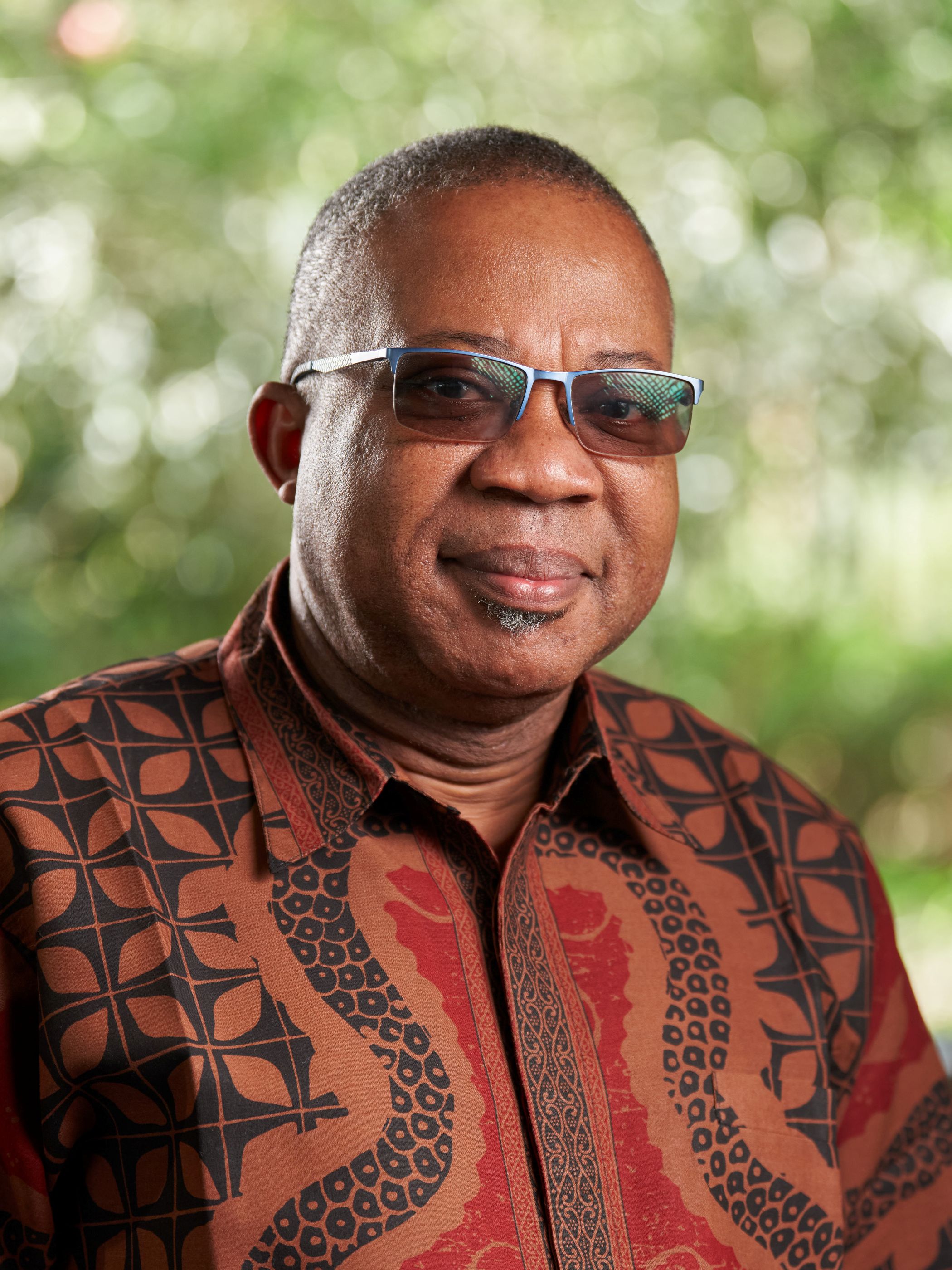
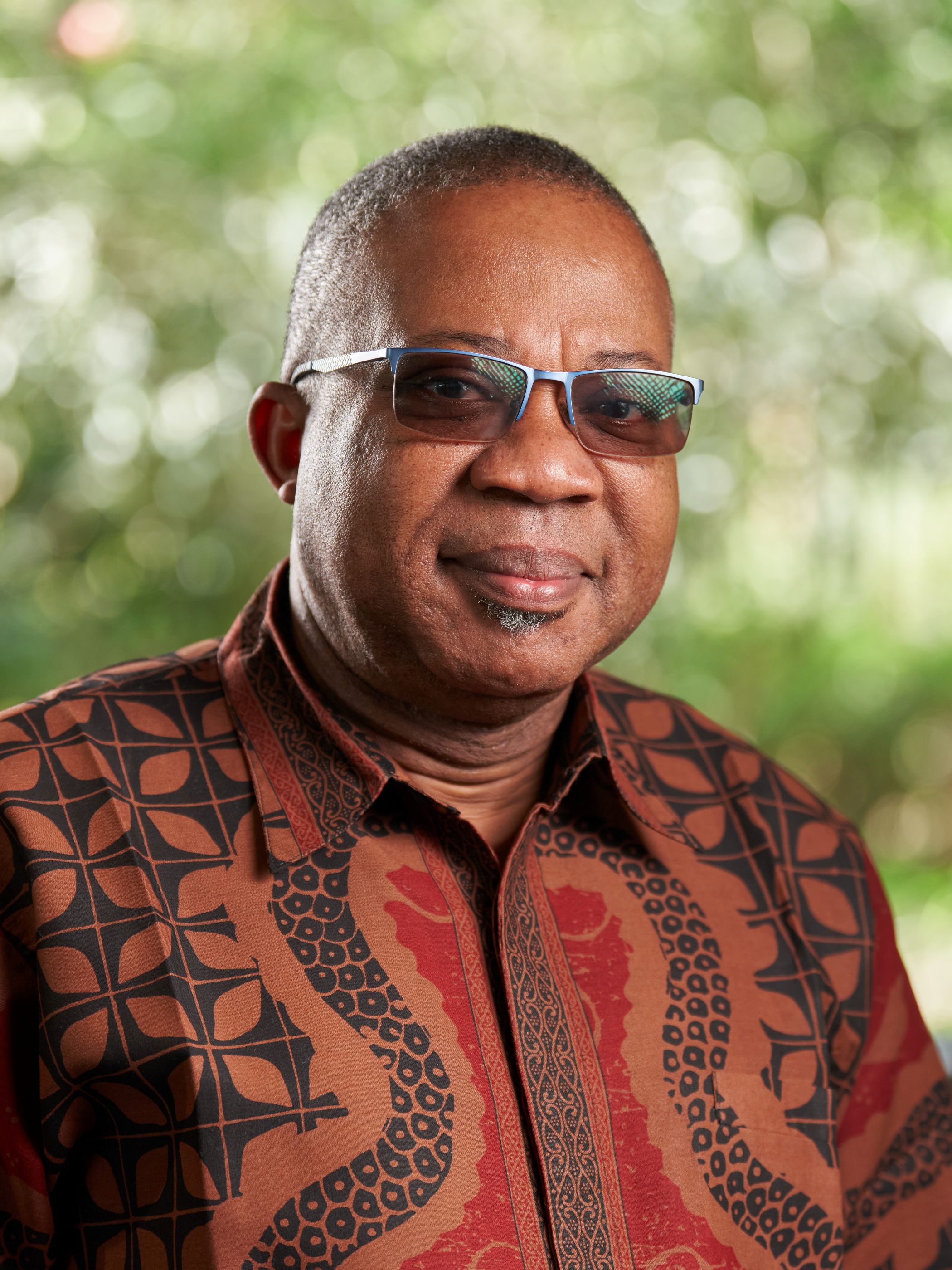
These are some of the questions that Afe Adogame of the History and Ecumenics Department & Religion and Society Program at Princeton Theological Seminary is tackling in his STIAS project.
“All facets of life are interrelated with food,” said Adogame. “It’s indispensable to our survival. Our life is conditioned by its absence, shortage and overabundance. Food is multidimensional, thereby (re)shaping identities, religious traditions, cultures and societies.”
“Religion and food are deeply intertwined. Food is part of how we articulate our religious, ethical and moral selves. Religion conditions what we eat, and what we eat impacts religion. Religious values shape how we feast, fast, and feed both the deities and ourselves. The place and role of food in religious and cultural imaginaries is complex and varies from individuals and communities.”
“Myths, rituals, festivals and ceremonies provide a unique perspective to grasp the intersectionalities. We are therefore looking at the popular, practised, lived aspects of food and religion; dietary practices often serve as fundamental expressions of faith, identity and communal bonding; and the symbolism and ritual, including the religious, social and cultural functions, as well as dietary restrictions and prohibitions, and fasting.”
Adogame explained that food is not only integral to ritual, but religion is often normalised, migrated, (re)constructed and literally internalised through food. Discourses around religion and food also intersect with globalisation, colonialism, tourism, migration, economic and political systems, social structures, systems of mythologisation, gender roles, cultural and ethnic identities. Faith and food feed into wider questions of sovereignty, poverty, security, justice, consumer culture, aesthetics, the ethics, and the politics of food production, distribution, consumption, wastage and sustainable food systems.
“Thus, foodways and foodscapes provide insights into the intricate nexus between food and religious imaginations, cultural identities, social structures, health, environmental and related factors within glocal societies,” he said.
Whetting our appetite
Adogame explained that his route into this work was an accident stemming from a passion for food and eating, and a habit of taking photos of food. “I have over 2000 photos,” he said. “Colleagues thought it was a research project until I eventually confessed I had no project, just a passion. So, we crafted a proposal which received a grant from Princeton for a Workshop in 2025 on Faith and Food.”
He showed a video from the workshop, which brought together scholars from different countries and disciplines around the question of how to theorise food and faith, and highlighted the need to reflect on both religious communities and theological institutions as well as for awareness and action.
“It’s not just about spiritual food but also real food,’ he explained. “You can’t listen to the Word if you are hungry. But religion and food is a latecomer in food studies and is under-researched and under-theorised. The conference aimed to explore it in more concrete terms – including the ethics and politics of eating, selling and consuming food and ensuring food security. It highlighted the role of religious institutions as potential food baskets, food laboratories, and the growing intersection of real estate, food production and food security against the backdrop of job creation strategies, sustainability and employability, empowerment, food security and strategies for expansion.”
Adogame’s seminar drew on his ongoing research mapping contemporary religious foodways in five Southeast Asian cities in Singapore, Malaysia, Indonesia, Thailand and the Philippines.
The project’s research questions include: What are the emerging trends that define contemporary religious foodways? How do they interact with the secular state and society and with religious pluralism in the respective countries? How are these foodways extending into food-industry supply chains? And how do they shape inter-religious relationships as well as secularism in societies?
The work included field visits to shopping malls, food courts, hawker centres, kopitiams, markets, restaurants, religious-themed kitchens and interviews with hawkers, restaurateurs, visitors and religious leaders, and the data gathered are currently being coded for data analysis.
Adogame sketched a world where religion, secularism and commercialisation intertwine with examples including the New Creation Church’s iconic The Star building in Singapore in which the church holds its services while renting out space for rock concerts, businesses and eating establishments featuring a multi-cultural array of cuisines; the Christ’s Commission Fellowship in the Philippines which features The Cup of Faith franchise selling Heavenly Blend Coffee Brew, as well as the Ristorante della Mitre where dishes are named for local Catholic Bishops; the Blok M Square in Indonesia depicting what he described as the “Halalisation of restaurants” and the Filosofi Kopi coffee shop where you choose your philosophy of the day; and, Bangkok with its publicly visible shrines and temples and the LifePoint Church home to the Seed of Hope coffee shop.
Adogame remarks that similar observations could be made about religious foodways and foodscapes in Africa and mapping these form the next phase of the project. He has started by mapping African diaspora markets, businesses and restaurants alongside African churches in Newark near Princeton. “The African diaspora food market represents a growing and increasingly visible segment of the multicultural food ecosystem, and has broader relevance beyond the ethnic food economy – which evokes further discussions on food poverty, sovereignty, sustainability, security and justice,” he said. “The African diaspora food ecosystem intersects with key global priorities related to international trade, biodiversity, sustainable food systems and diaspora entrepreneurship.”
Expanding this to Africa, he said: “Africa’s food ecosystem is a conundrum. There are over 600 million hectares of agri-land, yet there is hunger, unemployment and poverty. Why is there not much investment in people − human capital and agri-food systems and agro-industries to alleviate poverty, hunger and unemployment? Why do investments not prioritise human security more than national security? While we acknowledge the colonial economic legacy, infrastructural gaps, inadequate processing and preservation capacities, and corruption challenges, and structural trade imbalances and unequal access to global markets, we must unpack further why Africa produces what it does not consume and consumes what it does not produce.”
“My tentative bold statement is that religiosity continues unabated in Southeast Asian and African countries despite the rapid modernisation of societies and development of economies. For instance, Islamic and Buddhist revival movements have reinvigorated Indonesia, Malaysia, Thailand and Singapore. Christian megachurches have also made significant conversion inroads, including in predominantly Catholic Philippines. The same societies have witnessed the growth of the Halal and vegetarian food industries and businesses, while Christian-themed food sources, places and menus have proliferated.”
“Our case studies thus far capture the good, bad and ugly,” he said. “They show that the compartmentalisation of economics and religion is somewhat collapsing. Churches are collecting shop rents, but they are also going where the people are.”
He explained that while there is clearly increasing commercialisation of religion, some of the institutions are also involved in humanitarian activities. “And it’s not the exclusive preserve of any particular religion. You can’t universalise, but there are lots of commonalities. Many of the restaurants brand and rebrand to stay in business. The religious language can have both intended and unintended consequences − both attracting and putting people off.”
“What we are seeing is, to some extent, critiquing the Western dichotomy between the sacred and the secular. It’s more fluid in the Global South,” he concluded.
Article: Michelle Galloway
Picture: Curt Ruiters, Quickclick Productions