
In April this year, Dignity South Africa (DignitySA) launched a legal challenge in the North Gauteng High Court arguing that preventing medical assistance in dying is at odds with constitutionally enshrined rights like human dignity and bodily autonomy.
Quoted in the Independent on Saturday newspaper, Dignity SA said: “The organisation is not asking judges to legalise medical assistance in dying. Instead, it wants the court to declare the blanket common-law prohibition unconstitutional and order parliament to draft legislation within two years … Parliament would then have (…) to decide who qualifies for medical assistance in dying, what safeguards must exist and exactly how the law should work.”
A preliminary court date is set for 18 September. Thus far, the National Prosecuting Authority (NPA) and the Justice and Constitutional Development Minister have both said they would accept the court's decision, leaving the Health Ministry and Health Professions Council of South Africa to present counter-arguments.
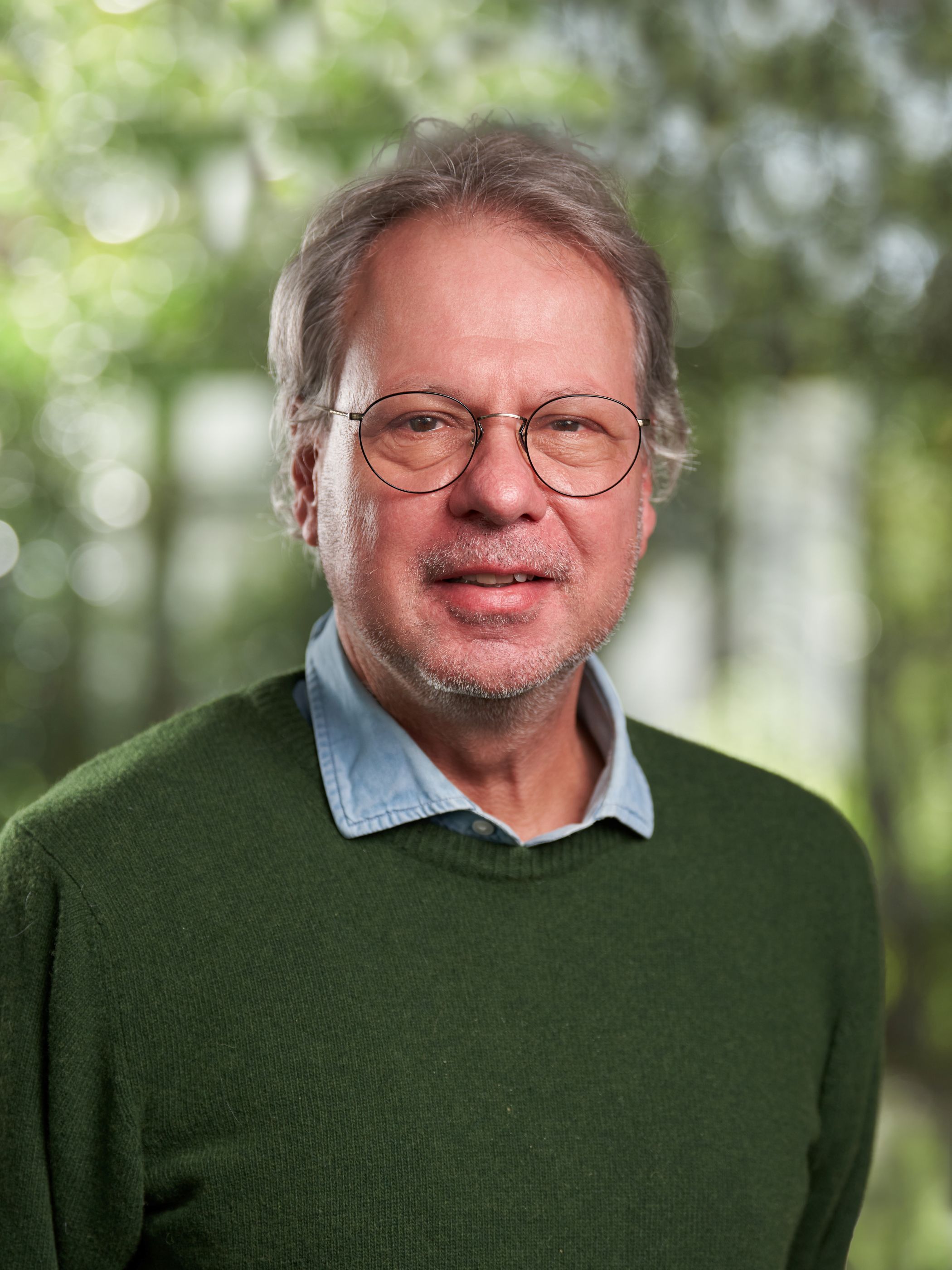
The outcome of this case is of huge interest to STIAS Fellow Maurice Adams of the Department of Public Law and Governance at Tilburg University in the Netherlands, who has been researching the regulation of euthanasia and physician-assisted suicide for many years and was Co-Chair of the Dutch Review Committee that oversees this topic.
In his Fellows Seminar presentation, Adams highlighted some of the many questions parliament might have to consider when the court follows the claims by DignitySA. “What precisely constitutes ‘terminally ill’ is a big question,” he said. “Also, what about people with multiple conditions, chronic psychiatric disorders, minors, people with dementia, those with living wills and people who are simply ‘finished with life’? What about the broader understanding of terms like ‘unbearable suffering’ which may not refer to a physical illness? Should the decision-making be medical? What about the role of pharmacists, nursing staff, palliative-care professionals, etc.? Also, how do we deal with healthcare liability, life insurance and insurance for medical doctors? These issues are all likely to come up in the South African case.”
“If South Africa embarks on this process, it could take many years and require extensive political, societal and legal analysis.”
Looking at regulatory models
Adams’ research project focuses on the regulation of euthanasia and physician-assisted suicide (PAS), combining legal - i.e. constitutional and criminal analysis - with empirical insights from the fields of public and regulatory governance. The central question of his project is: How can legal and regulatory mechanisms be designed to effectively protect weak and vulnerable individuals in the context of euthanasia and PAS?
“The core hypothesis is that conventional approaches regarding this issue, i.e. straightforward decriminalisation, may be insufficient,” he explained. “Rather than treating regulation as a mere legal formality, the project investigates the potential of a regulatory model that actively encourages medical professionals to subject their euthanasia and PAS practices to transparent systems of supervision and oversight.”
He defined euthanasia as the intentional life-terminating action by someone other (usually a medical doctor) than the person concerned, at the request of the latter, and PAS as occurring when a physician provides the medication or other means by which the patient can end their own life. “PAS may offer more safeguards from abuse,” he said. “But the distinction, in legal terms, is not very relevant.”
As Co-Chair of the Dutch Review Committee on this topic, Adams explained that the Dutch have instituted a control route which is not strictly legal but operates through a form of review of a more medical-professional nature. “If regulation aims to improve medical practice and create transparency, then you should aim to avoid criminal control,” he explained.
The Review Committee consists of a lawyer, a medical doctor and an ethicist. It’s a self-regulatory/professional type of control that works well in the Netherlands, although it is not without challenges, Adams said. "Judgement is professional first and foremost, acting on general rules prescribed by the courts and parliament, but given substance by the medical profession itself. We need doctors to be prepared to confront themselves and their behaviours, and strict criminal law will not help in doing so," he said.
This type of regulation has been successful from a legal and professional point of view, he said, adding: "The main argument for regulation is that euthanasia and PAS happen anyway, and the aim is also to try and improve it for the benefit of the vulnerable.”
He also emphasised his own situatedness. “My research and experience are in an affluent North-West European context, in a developed society with a well-functioning healthcare system, good end-of-life care and high levels of public trust in professional institutions. But I’m also very aware that my arguments must be able to carry weight in other social contexts.”
He pointed to some of the important cases that have influenced and shaped local and international law and thinking in this regard and highlighted some conflicts inherent in law and how these have been dealt with.
“For example, the Dutch criminal code expressly didn’t seem to allow for euthanasia. But through interpretation the courts could allow for euthanasia nonetheless, because they noted that medical doctors were confronted with two duties they couldn’t at the same time live up to. From a legal point of view, this was done through the technique of what is called ‘the defence of necessity’, which exists in almost all legal systems,” he explained.
Adams said in the cases he is concerned with, there was conflict between, on the one hand, the duty of physicians to protect life and, on the other hand, their duty to relieve suffering. Under certain conditions, the courts said medical doctors could choose the latter option, with the death of the patient as a result.
“Legal texts always require interpretation. Law is always shaped by the broader legal, social and cultural context,” he added. “Regulation cannot rest on abstract principles alone.”
“Where healthcare is not equal, choice might be shaped by deprivation. You cannot simply transpose regulation from a wealthier healthcare system to another. Vulnerability is both an individual condition and one shaped by systemic poverty and inequality. We must make legal and legislative reasoning more conscious of the context in which it operates. We don’t really know how to do that yet," he said.
“But at the same time this shouldn’t deny competent individual agency,” said Adams.
The discussion addressed some of the added complications of the role of religion, other worldviews and cosmologies; law as a secularised Western discourse; and the challenges of the organ-donor space.
“I am a self-consciously, self-identifying lawyer,” said Adams, “not an anthropologist or social scientist, but I do see law as interdisciplinary. My research questions stem from law, but I try to involve other disciplines. I’m often confronted with my own lack of possibilities as a scholar but happy to confront them.”
“It will be very interesting to see how the South African Courts tackle this issue,” he concluded.
Article: Michelle Galloway
Photo: Curt Ruiters, Quickclick Productions