
Can we use digital twins to help us explore and design virtual experiments to solve some of the remaining unknowns in tuberculosis research?
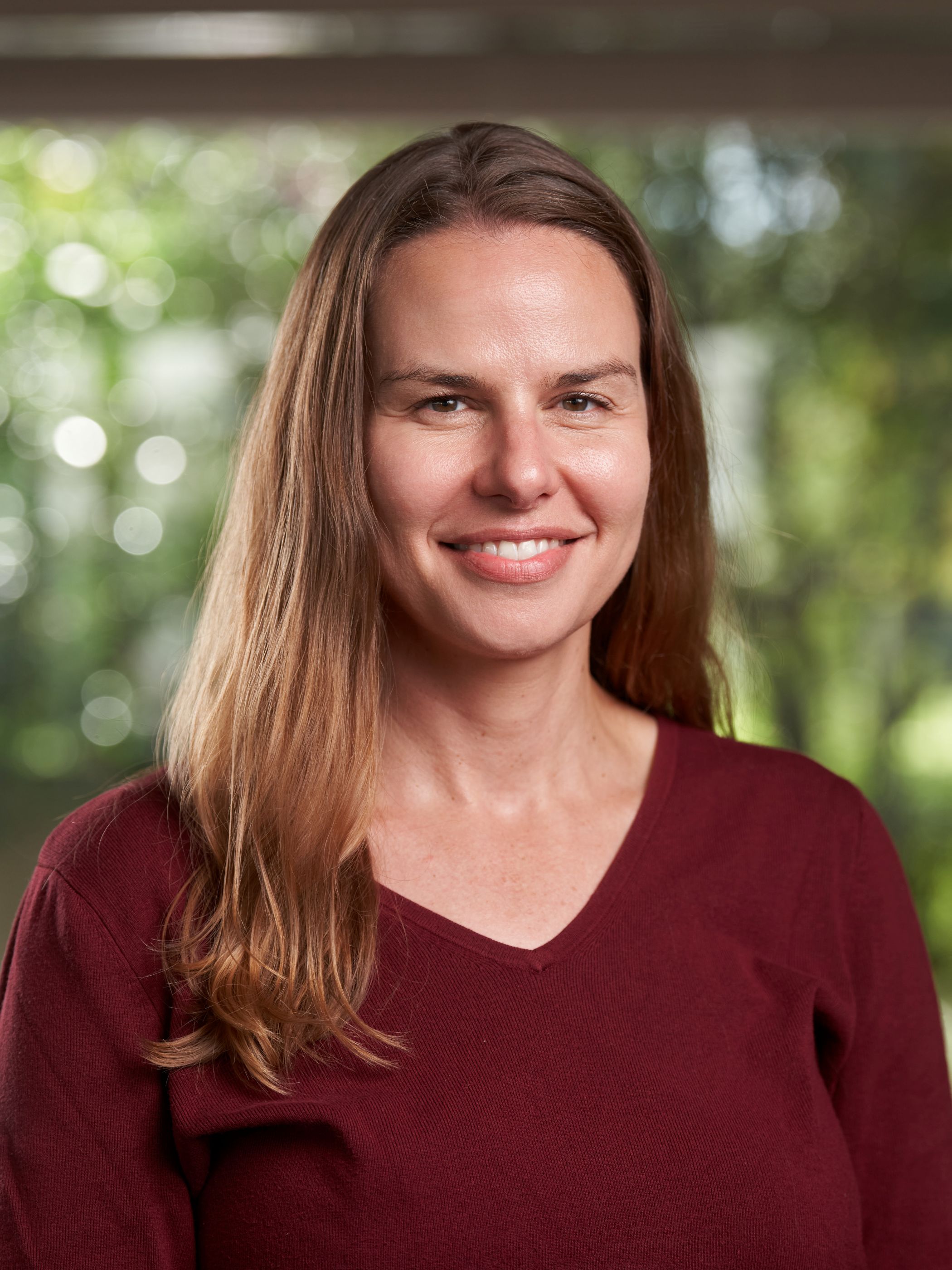
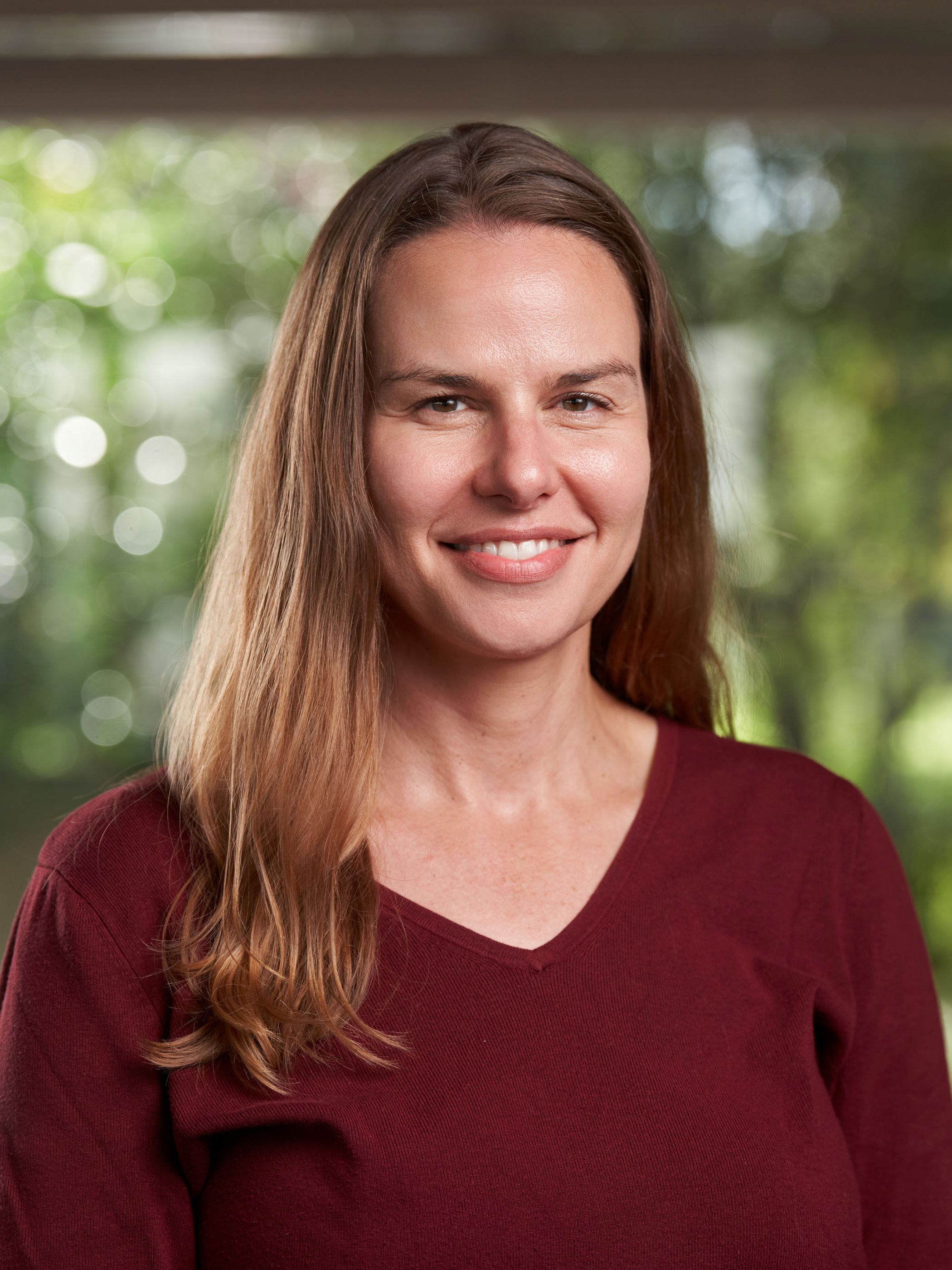
This is the fundamental challenge that STIAS fellow Elsje Pienaar of the Weldon School of Biomedical Engineering at Purdue University in Indiana, along with colleagues at Stellenbosch University, hopes to resolve.
Pienaar explained that systems biology and computational biology approaches have significantly impacted our understanding and interpretation of host-pathogen interactions. These use mathematical, statistical and machine-learning models to represent complex biological interactions. The representations can then easily and cost-effectively quantify the relative contributions of each biological mechanism to the overall system dynamics, potentially identifying weak links that can be exploited to subvert the pathogen.
These powerful models are traditionally applied as analysis tools, relying on defined sets of experimental data for inputs, and then providing new insights and hypotheses for how host-pathogen interactions emerged in these experiments.
Recent developments of ‘digital twins’ of experimental assays have moved us closer to digital versions of experimental systems that we can then use to do ‘digital experiments’ that are informed by strategically collected experimental data. While major findings will have to be validated experimentally, using digital twins allows fast, cost-effective optimisation and exploration of the experimental design space, thereby minimising the number of real-world experiments needed.
Pienaar’s seminar reflected on the challenges and opportunities for using digital twins in experimental TB research, and what it might take to construct a virtual lab containing digital twins of diverse experimental assays.
An old but huge problem
Tuberculosis (TB) – a pulmonary disease caused by the bacterium Mycobacterium tuberculosis has been around forever, co-evolving with humans for 10 000 or more years – and it still has massive global impact. According to World Health Organization data from 2021, COVID caused 1.24 million registered deaths, TB caused 1.13 million, HIV/AIDS 0.63 million and malaria 0.62 million (with deaths from TB in people with HIV classified as HIV deaths). This is what TB has been doing for decades.
TB is spread by inhaling the bacteria from air droplets. The bacteria then form granulomas in the lungs, with common symptoms including weight loss, coughing, night sweats and loss of lung function.
“Some people can clear the infection – we don’t know exactly how, but it does happen,” said Pienaar. “About 5 to 10% progress to active TB disease while most (90 to 95%) develop latent TB disease – where they are not symptomatic but can still spread the bacterium. Over time, as immune systems change with age, the delicate balance shifts and you can get reactivation TB – this can happen over decades.”
“The original treatment was fresh air and good nutrition in Sanatoria − it made people feel better but was not actually therapeutic.”
Today treatment is much better, with effectiveness estimated at 86%. But it’s arduous, requiring at least six months of therapy, which is a challenge for adherence, especially once symptoms start to clear and people think they are cured. And not finishing the full course is a problem for the development of resistance.
“Most South Africans are familiar with the BCG vaccine, a live-attenuated vaccine that protects children against severe disease but does not prevent infection,” said Pienaar. “There are many other vaccines in the pipeline, so there is hope for more effective vaccines being developed if they can be equitably administered.”
South Africa has one of the highest TB burdens in the world. “Deaths per year went down for a while, then stagnated. We are nowhere near the global targets in reducing mortality,” explained Pienaar. “The big challenge is TB and HIV – we have the highest TB/HIV coinfection rate in the world. HIV needs to be part of the conversation.”
She explained that TB research relies on an integrated community of microbiology and immunology experts asking fundamental questions about how host-immune responses interact with the pathogenic bacteria during disease progression.
And although we know a lot about TB, there are vital outstanding questions, including: What does a good immune response look like for prevention (before exposure) and for therapy (after exposure); What do we want immune cells to do and when? How do we boost the immune system to support antibiotics? What are the best treatment strategies? Are there insights from the immune systems of people who clear infection? And what is the impact of variability between populations and individuals?
Pienaar explained that we need to better understand the complex interactions between the bacterium and the macrophages, T cells (both killer and helper) and cytokines of the immune system.
“Currently, to understand granulomas we may use human studies – either via resection of human tissue or post-mortem, but these are generally severely diseased tissues which don’t give the full picture. Animal models are also used but pose ethical and cost implications.”
Digital twinning
In vitro (a process that takes place in a test tube or petri dish outside the human body) and in silico (computational work) – the digital twins – offer other research options.
In vitro models range from studies using mono-cultures (bacteria alone) to co-cultures (bacteria and macrophages) and organoids (bacteria + macrophages + T cells). They are close to the real world but can be resource-intensive – requiring time, money and enough cells to do the experiments.
On the in silico side – one approach is to build a virtual agent-based model for which you need an environment, agents and rules. The idea is that such models can take the simple decisions and behaviours of individual components (like the TB bacteria and immune system cells) and translate these into a population-level outcome.
Pienaar used the example of a human patient with diabetes and a digital twin. The patient uses a smartwatch, glucose sensor, laboratory tests, health records and genetics, while the digital twin contributes data integration and quality control. A doctor can test potential therapies on the digital twin to extrapolate long-term responses, do a risk assessment, and use this to update the human patient’s treatment plan.
“We are proposing building a digital twin of the lab from scratch,” she said. “From the in vitro side, the agents are the immune cells and bacteria, and the rules are drawn from the microbiology and immunology literature. While the in silico side would offer virtual representation, modelling and simulation, artificial intelligence, mechanistic and empirical models and visualisation. In vitro and in silico models are natural complements. But the key part is feedback from the virtual model to the physical. Continuous iterative feedback is what makes a digital twin.”
“We believe this can generate good, robust data. At this point the biggest challenge is practical – the time it takes to do the data integration. We need a process to integrate more quickly but still at high quality,” she continued.
“There are no twins of humans in our work, just twins of in vitro assays,” she laughed. “But every time we do an iteration, we are getting closer to the real biology of structures. At some point we will be able to do virtual trials.”
“We are trying to understand what a good immune response to TB looks like, so we must understand what the immune cells are doing at any one time. Ultimately, we want to know why infection is clearing or not clearing so that eventually we can manipulate those factors.”
Pienaar also explained that although the focus of her STIAS work is TB, her students and post-docs are doing similar work on other mycobacteria, Alzheimer’s, HIV, Ebola and cell-tissue signalling. “There is only really time to build patient-specific infection-specific models with longer-term chronic infections,” she explained.
And how long does she predict this work will take? “At least five to ten years for data of clinical relevance,” she replied.
Article: Michelle Galloway
Picture: Curt Ruiters, Quickclick Productions