
The urban landscape is conventionally viewed as an intersubjective commons that builds publics, cultural identity and feelings of citizenship. This commoning is underwritten by the unique way urban landscape functions as shared heritage: as a locus of collective memory and transgenerational socio-natural narratives that can potentially heal historical divisions. This kind of urban commoning is often contested, however, by changes in the physical environment brought about by social, economic, demographic, technological and environmental dynamics, as well as changing historical narratives and conceptions of heritage. This contestation is especially true in Cape Town: a city whose multilayered colonial history and unique natural setting have created a distinctive shared landscape culture, but which is now being tested by newly arrived publics and previously suppressed histories, as well as extreme real-estate pressure and environmental disturbance. In contemporary Cape Town, this combination of emerging realities presents challenges to both commoning and managing the “future of the past”.
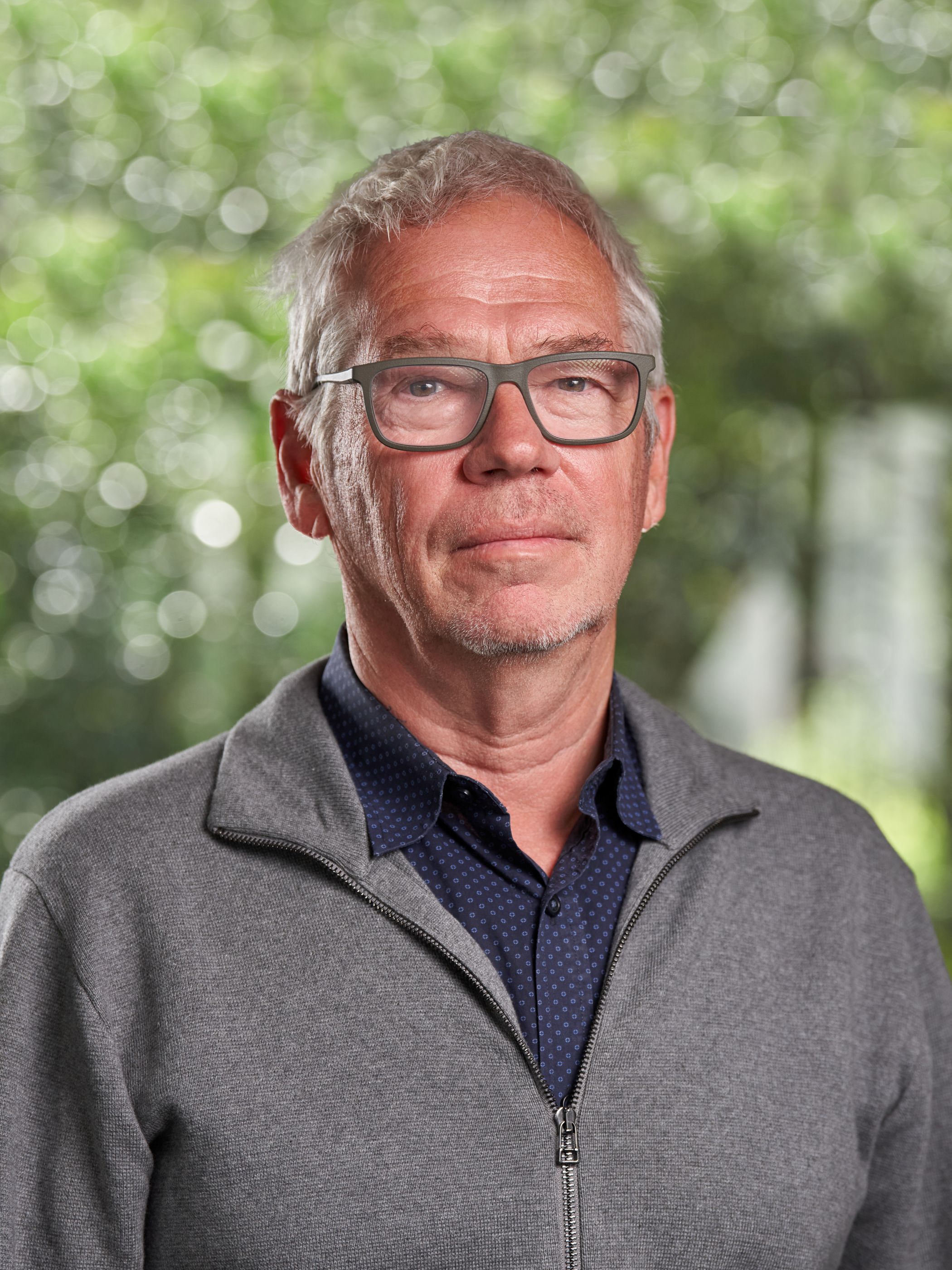
Jeremy Foster’s interest in these challenges stems from his long-standing interest in place identity and attachment, and how cities function as “museums without walls”. “Having lived in and studied several global cities, I wanted to turn that same gaze on Cape Town.”
Foster, who is from Cornell’s College of Art, Architecture & Planning, believes that understanding current challenges to commoning in Cape Town needs to start with recognising how cultural and natural processes have continually interpenetrated in the city’s growth. As a result, the social conceptions of nature that historically constructed and were constructed by this cityscape continue to shape everyday socio-ecologies and the aesthetics of daily life. More than most cities, Cape Town‘s cityscape is a reworking of nature that both encodes the attitudes and intentions of generations of city builders, and escapes and transcends them. The growth of the city never eradicates its natural foundations, which create starting points for urbanisation, and path dependencies that indirectly shape the city’s material character.
Reframing Cape Town’s growth from a more-than-human perspective “expands the temporal e/affects of urban heritage beyond purely human histories, and embraces the ongoing, multitemporal ‘holding together’ of beings and things through which ‘nature’ and ‘culture’ become bound together. This project is neither a comprehensive history of, nor an attempt to adjudicate in current heritage battles about, this urban environment,” he explained. “Instead, I’m trying to reframe the nature of the problem through a consciously geographical narrative that integrates facts, experiences and histories. I want to move from thinking about landscape as an aesthetic or symbolic object, to seeing it as a process or a tension. In reality, all landscapes are dynamic, subject to forces that encompass the human and cultural, the non-human and bio-physical. Always in a state of becoming, landscapes are a vibrant and sometimes unpredictable interaction between practices, materialities and temporalities, and therefore, e/affects of time and memory. They can tell multiple stories, the unintentional often more interesting and durable than the intentional. I believe this is especially true in constructed environments we now call ‘post-colonial’, where unsettled and contingent histories of earth, air, water, plants, technologies and society converge and fold back on themselves in unexpected and non-linear ways.”
Foster used the double perspective of Table Mountain and the Cape Flats as linked landscape formations to reconstruct how the entanglements of climate, geology, and hydrology have co-shaped the city’s ecologies and urbanisation. “Without Table Mountain, Cape Town probably wouldn’t exist,” he said. “It not only creates a wide variety of environments and prompts for human settlement; its powerful visual character has drawn human imagination for centuries. Local variations in temperature, rain and soil types led to the emergence of unique fynbos ecologies, while climate change led to the withdrawal of the sea and the emergence of the Cape Flats.”
This geological-scale history created environmental conditions on the eastern side of the Mountain that were propitious for both Khoisan herders’ seasonal migrations and early settler agricultural practices. The resulting confrontation between extractive, colonial, and sustainable, indigenous practices led to the planting of the famous Wild Almond hedge (known as Van Riebeeck’s Hedge) in 1660. Intended as a defensive for burgher farms, this also marked the Eastern limit of arable land and became the first of several human-made infrastructures that guided the suburbanisation of the Mountains eastern side, an already established agricultural landscape that was further ‘improved’ and landscaped by Anglophile bourgeoisie escaping the city. Foster explained that by the early 20th century, this had created a scenographic wooded neonature, which was further enhanced by Cecil Rhodes acquisition and protection of the Mountain’s eastern slopes. From the 1920s on, growing scientific knowledge about the Cape Floral Kingdom helped promote this protection of the Mountain, and build feelings of white citizenship and nationhood. It also reinforced a scenographic relationship to urban nature rather than one based on livelihood.
Meanwhile, the Cape Flats remained sporadically settled due to the harsh environmental conditions and the laissez-faire attitudes to urban planning. Until World War I, Cape Town’s growth was largely shaped by infrastructure and real-estate interests; the cityscape contained a mixture of racial communities, some close to the nearby nature of the Mountain. At the same time, Foster argues, “ecologically the Mountain and Flats remained linked parts of the same hydrological system. The interdependence between mountain precipitation and underground aquifer meant that what happened on the Mountain, environmentally, impacted life on the Flats.” From the 1860s, Cape Town had an ongoing quest for clean water, of which mountain water was the purest. Mountain-top dams built from 1870 onward soon became inadequate, leading to the construction of Steenbras in 1921, which meant crossing the Flats with new infrastructures. This imprinted the Flats as a landscape where functions that did not fit into the scenographic visions of the city could be relegated, and whose mutable, flood-prone character discouraged both lasting settlement and memory. Unlike more historic parts of the city closer to the Mountain, the Flats still have little written or visual history.
“From the 1930s onwards, a more strategic, interventionist approach to urban growth took over that laid the foundations of racial divisions. This was dramatically augmented after 1948 – in the Nationalist government’s highly planned and ruthless segregation which sought to eradicate any racial mixity in older parts of the city,” said Foster. “Forced removals in the 1960s to places like Mitchell’s Plain not only created the stark territorial and qualitative divisions we see today. They led to a loss of temporal orientation, as well as meaningful engagements with nearby nature. For many Capetonians, feelings of continuity and belonging to the city gave way to feelings of trauma, alienation and longing.”
Case studies of post-colonial memoryscapes
“In Cape Town today it’s no longer possible to talk of shared temporal consciousness. At best, we can say that the passage of time has produced multiple histories, and therefore spectralities,” he said. “From this heterogeneity of remembering in and through the cityscape, perhaps the most useful one for motivating action and caring for the future might revolve around environmental vulnerability. The notion that the future of the past is entangled with the larger dynamics of climate change implies a kind of shared citizenship that cuts across simplified notions of decolonisation.”
To illustrate this possibility, Foster zoomed in on two sites as potentially interesting recent ‘memoryscapes’. Both are nominally in the Flats, but also recall underlying hydrological continuities – both past and present − between this setting and the Mountain.
The first is the Princess Vlei Conservation Area − a wetland between the suburbs of Grassy Park and Retreat which served as a community meeting place during forced removals. In 2014, a five-year campaign prevented the development of a shopping mall. The Princess Vlei Forum is now working with the community and the City of Cape Town and Cape Nature to restore the biodiversity and celebrate the area's socio-natural history. “Princess Vlei is a rare example of bottom-up social ecological commoning, of people working and thinking with the landscape,” said Foster. “Not only has this landscape become the biggest community-led fynbos regeneration project in the region, but it’s also classified now as a heritage site. Located between white and coloured areas, it transcends historical divisions; it’s a project in which environmental and cultural restoration are entangled, and equally important.”
The second site is the Riverlands Eco Park between the Liesbeeck and Black Rivers. The development of the area began with the building of the Amazon Headquarters, which caused outrage amongst descendants of the Khoisan for whom the area has historical and cultural significance. The compromise reached included the building of a Cultural Interpretation Centre and First Nation’s Indigenous Garden alongside the Amazon complex, shopping malls, restaurants and accommodation, and the restructuring of the riverbanks in anticipation of future flooding. “When I visited, the Cultural Centre was closed,” said Foster, “suggesting that while this is a powerful corrective, it's mostly inspired by a discursive environmental history, something intended to create an emotional connection rather than a material engagement with the past.”
Foster argues that “for all its cultural-interpretive gestures towards the pre-colonial past, Riverlands highlights the contradictions of configuring the future of the past in the age of commodification and privatisation. That said, it’s still an incomplete project that calibrates multiple temporalities, including that of environmental sustainability, which may in the end prove to be more durable and meaningful.”
“By contrast, Princess Vlei is modest but more interesting. It’s about an assemblage of actors who came together to mobilise institutional support to recuperate something good − an ongoing process. At the same time, though, driving both projects is an idealised image of landscape which may or may not itself be realisable, but which inspires environmental actions and experiences that transcend that image,” he continued. “The two projects also remind us that while it isn’t possible to physically erase the past, the cityscape can be transformed through design to suggest different kinds of temporal integration. Of course, this depends on the changing configuration of the actors involved, the actual environmental problems and the narratives we draw on in making sense of those problems.”
“It’s challenging to create a positive story about what’s going to happen in Cape Town. But because change starts with caring about and for the environment, this needs to grow out of people’s everyday engagements with it; this is what drives my project, and most of my work. While public histories and political myths do shape consciousness of the past, they are not the primary way through which individuals and communities relate to the past. I’m less interested in cultural politics about the past than in how the material environment itself helps people understand, and care about, continuities between past, present and future.”
“Ultimately, I’m interested in creating conversations on the importance of the environment. This requires seeing landscape as an experimental locus of life and meaning, thinking and working with landscape rather than talking about it,” concluded Foster.
Article: Michelle Galloway
Picture: Curt Ruiters, Quickclick Productions