
- Nationality
- 🇸🇪 Sweden
- Residencies at STIAS
- 2013 2nd Semester / 2015 1st Semester / 2016 2nd Semester / 2018 2nd Semester / 2019 2nd Semester / 2021 2nd Semester

Projects
-
How did Homo sapiens become Homo docens? On the evolution of social learning and teaching during the Paleolithic
The purpose of the project is to analyse why teaching has evolved only in the line leading to Homo sapiens. -
Archaeology of a Hungry Mind
Why and how did we (Homo sapiens) evolve into a species that is dependent on its ‘brains’ rather than its ‘brawn’ for our survival and successful spread across the globe?
Related to this person
Article
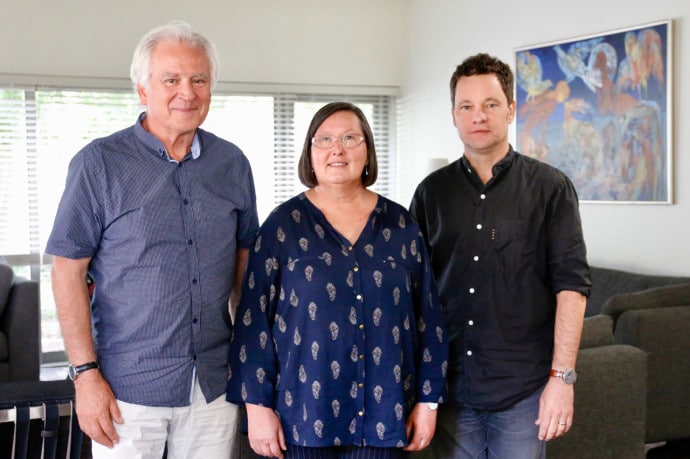
How we learnt to think like humans - Fellows' seminar by Peter Gärdenfors, Marlize Lombard and Anders Högberg
STIAS fellows Peter Gärdenfors, Marlize Lombard and Anders Högberg after their seminar on 29 November 2018 Our expanding knowledge of the hominin tree, in combination with the archaeological record of sub-Saharan Africa and the reconstruction of ancient human genomes change our understanding of human cognitive evolution.
Article
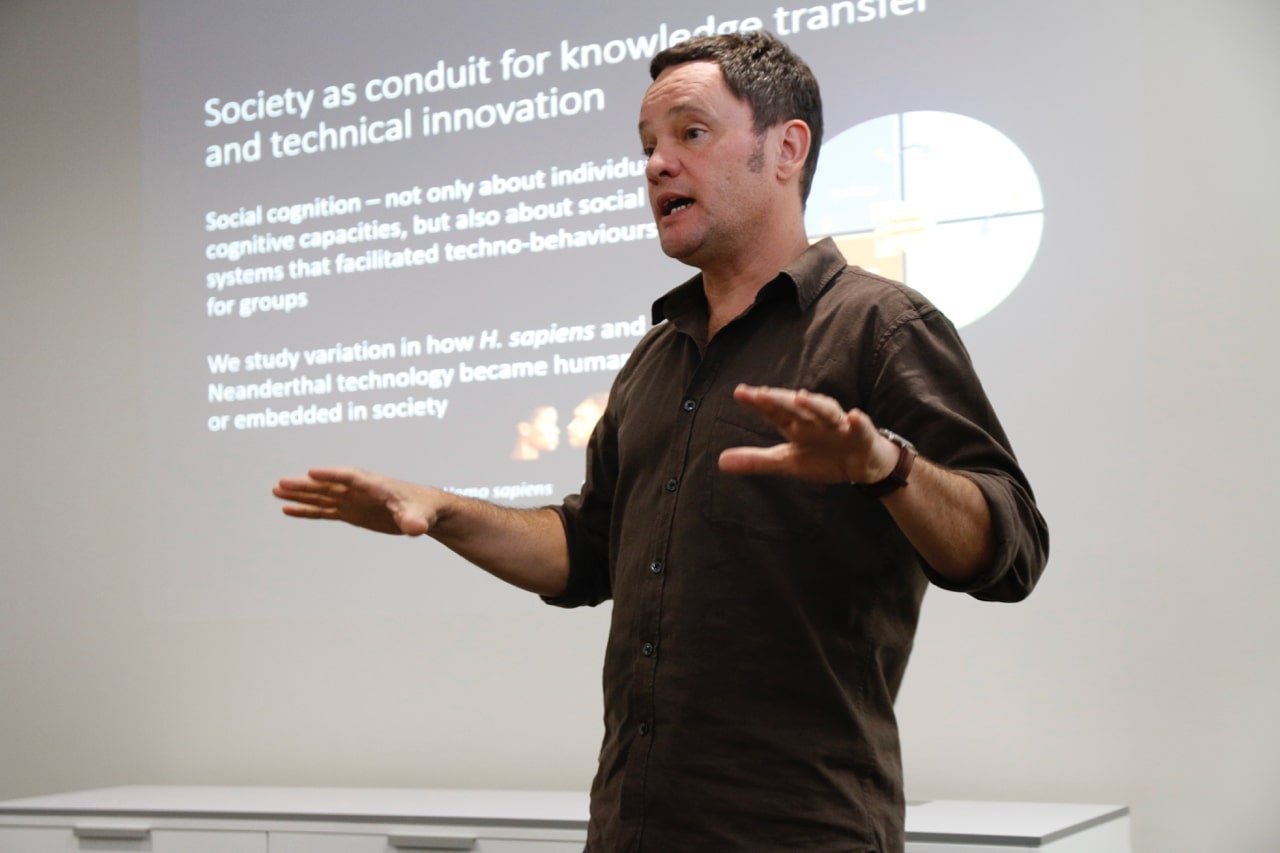
Archaeology of a hungry mind - Fellows' seminar by Marlize Lombard, Anders Högberg and Peter Gärdenfors
We suggest that a useful way to explore the evolution of human cognition between about 300 000 and 50 000 years ago is to think of it in terms of a co-evolutionary feedback loop between aspects of biology, technology, society and ecology.
Article
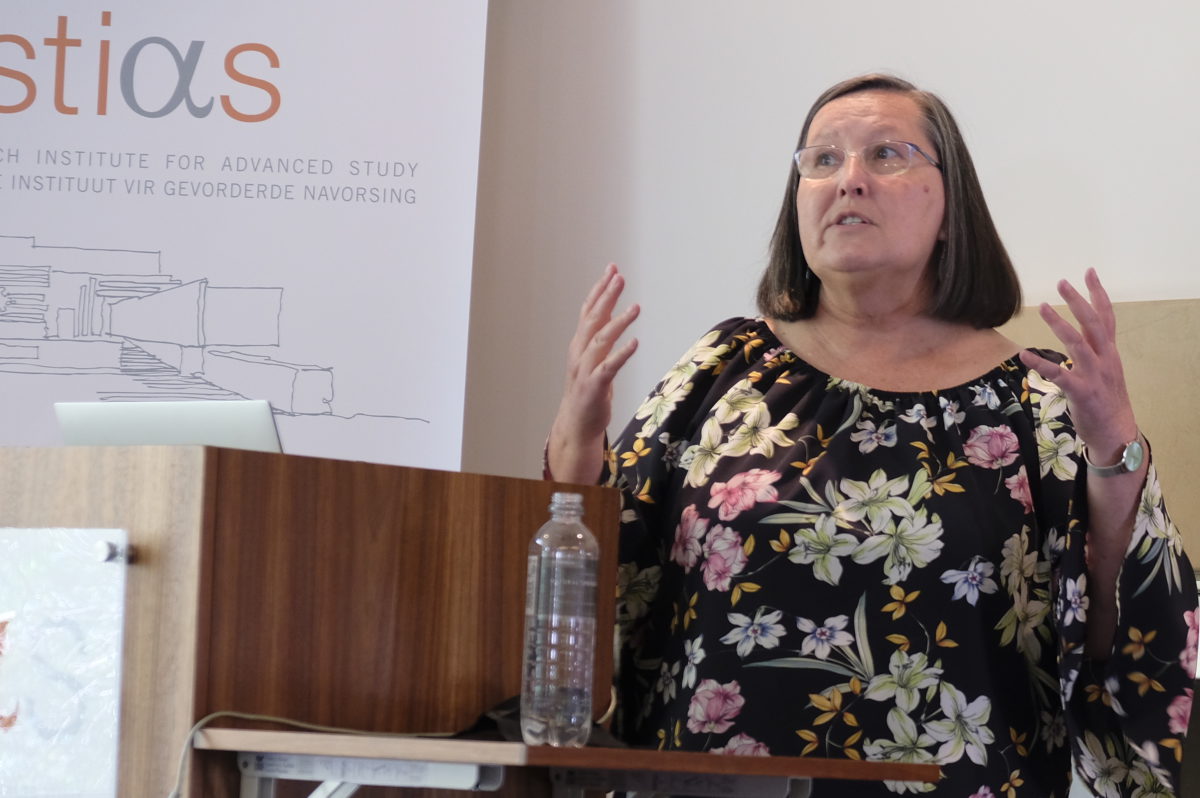
Minds on Fire - Fellows' seminar by Marlize Lombard, Anders Högberg and Peter Gärdenfors
Cognitive and archaeological aspects of hunter-gatherer fire making The art of making fire was described by Darwin as one of the greatest achievements of humankind.

Publication
The Evolution of Sentenial Structure
Peter Gärdenfors. 2014. The Evolution of Sentenial Structure. Humana.Mente Journal of Philosophical Studies, 27, 79-97
Publication
Knowing, Learning and Teaching—How Homo Became Docens
Högberg, Anders, Peter Gärdenfors, and Lars Larsson. 2015. Knowing, Learning and Teaching—How Homo Became Docens. Cambridge Archaeological Journal 25 (04):...

Publication
Children, Teaching and the Evolution of Humankind
Högberg, Anders, and Peter Gärdenfors. 2015. Children, Teaching and the Evolution of Humankind. Childhood in the Past 8 (2): 113–21. doi:10.1179/1758571615...
Publication
Evolutionary Mechanisms of Teaching
Gärdenfors, Peter, and Anders Högberg. 2015. Evolutionary Mechanisms of Teaching. Behavioral and Brain Sciences 38 (June): e41. doi:10.1017/S0140525X140004...

Publication
Tracking the evolution of causal cognition in humans
Lombard, Marlize and Peter Gärdenfors. 2017. Tracking the evolution of causal cognition in humans. Journal of Anthropological Sciences, 95, 219–234. https:...
Publication
The Archaeology of Teaching and the Evolution of Homo docens
Gärdenfors, Peter and Anders Högberg. 2017. The Archaeology of Teaching and the Evolution of Homo docens. Current Anthropology, 58(2), 188–208. https://doi...
Publication
Demonstration and Pantomime in the Evolution of Teaching
Gärdenfors, Peter. 2017. Demonstration and Pantomime in the Evolution of Teaching. Frontiers in Psychology, 8. https://doi.org/10.3389/fpsyg.2017.00415

Publication
Causal Cognition, Force Dynamics and Early Hunting Technologies
Gärdenfors, Peter and Marlize Lombard. 2018. Causal Cognition, Force Dynamics and Early Hunting Technologies. Frontiers in Psychology, 9. https://doi.org/1...

Publication
Semantic domains of demonstratives and articles: A view of deictic referentiality explored on the paradigm of Croatian demonstratives
Gärdenfors, Peter and Maja Brala-Vukanović. 2018. Semantic domains of demonstratives and articles: A view of deictic referentiality explored on the paradig...
Publication
Pantomime as a Foundation for Ritual and Language
Gärdenfors, Peter. 2018. Pantomime as a Foundation for Ritual and Language. Studia Liturgica, 48(1–2), 41–55. https://doi.org/10.1177/00393207180481-204
Publication
Levels of communication and lexical semantics
Gärdenfors, Peter. 2018. Levels of communication and lexical semantics. Synthese, 195(2), 549–569. https://doi.org/10.1007/s11229-014-0493-3
Publication
Technology led to more abstract causal reasoning
Gärdenfors, Peter and Marlize Lombard. 2020. Technology led to more abstract causal reasoning. Biology & Philosophy, 35(4), 40. https://doi.org/10.1007...
Publication
Causal Cognition and Theory of Mind in Evolutionary Cognitive Archaeology
Lombard, Marlize and Peter Gärdenfors. 2021. Causal Cognition and Theory of Mind in Evolutionary Cognitive Archaeology. Biological Theory. https://doi.org/...