
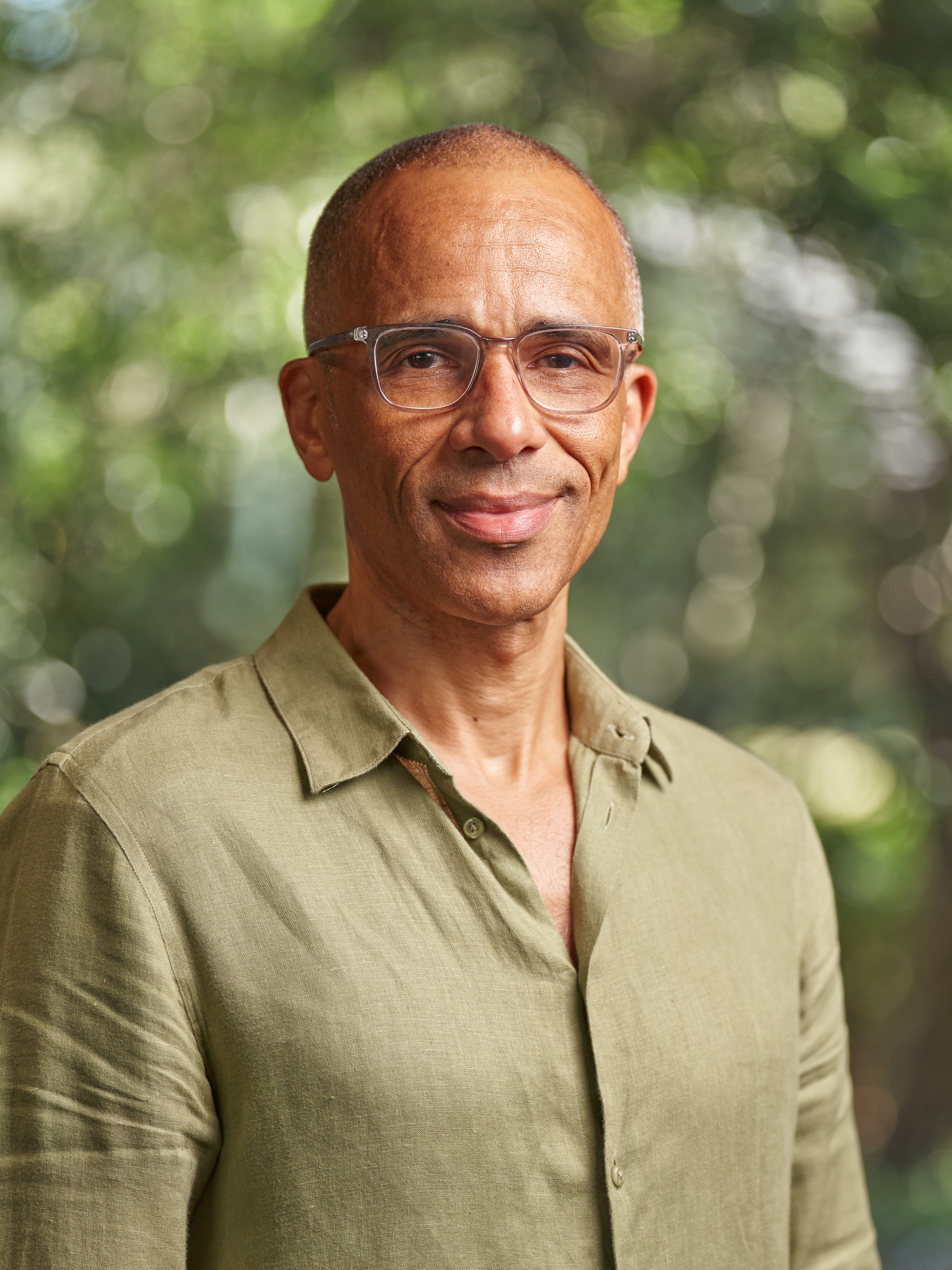
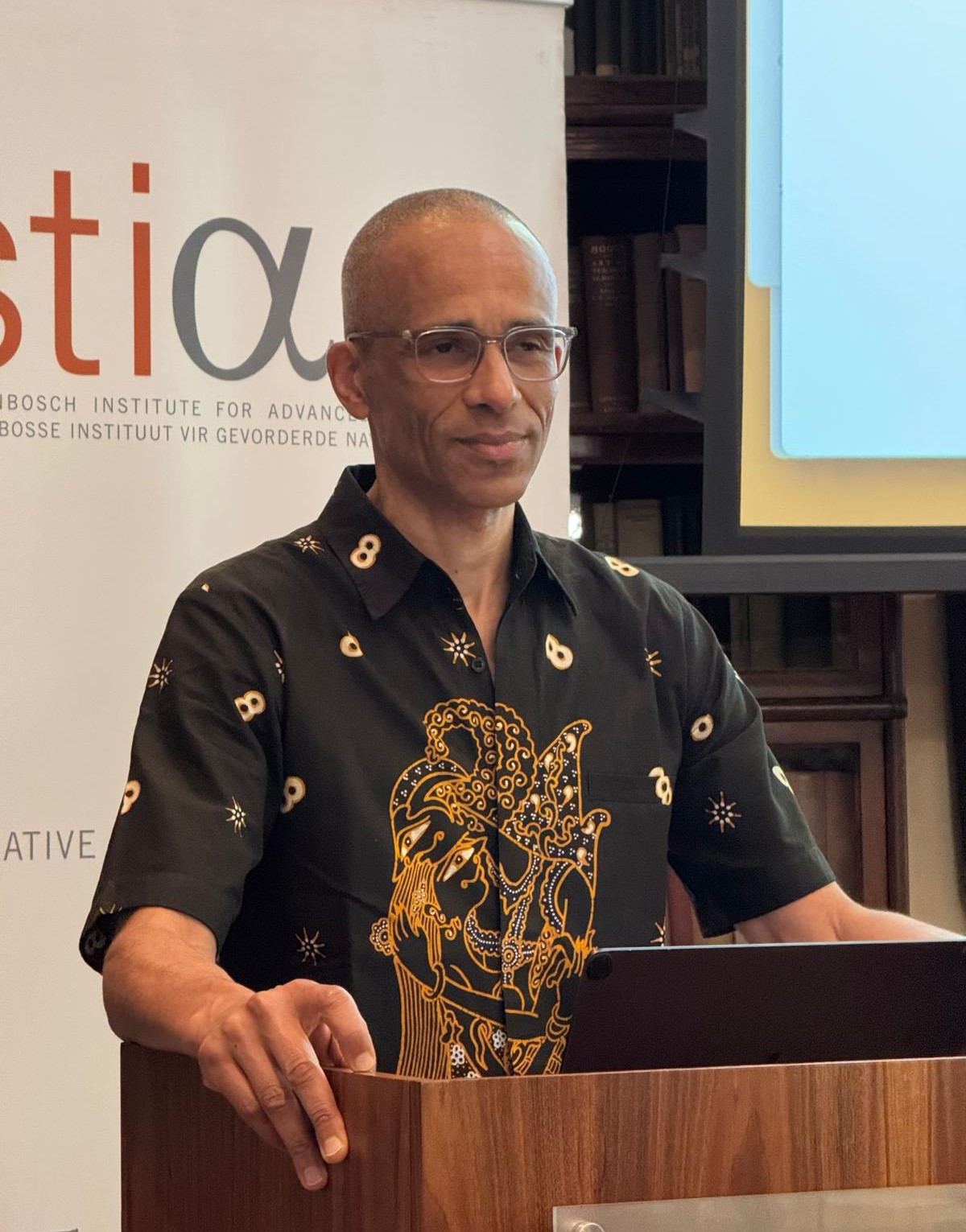
“The trajectory of West African Pidgin contrasts sharply with the way colonial languages were forcibly entrenched in Africa. It forces us to rethink the nature of language evolution in the 21st century,” said Kofi Yakpo, a linguist in the School of Humanities at the University of Hong Kong.
“Large numbers of West Africans can communicate with each other in Pidgin despite the existence of different varieties. Speakers switch seamlessly between Pidgin and languages like English, Spanish, Yoruba, Twi or Duala. There is enormous linguistic creativity going on here.”
In a departure from the standard narrative, Yakpo explained that the terms ‘pidgin’ or ‘creole, which describe languages like West African Pidgin, are heuristically of limited value. There is no ontological creole type. The terms are only of value as socio-historical descriptions, in that they are associated with the European colonial project and African resistance and adaptation to it. Linguistically speaking, we find nothing else but a process of normal language differentiation.”
A transatlantic language cluster
Yakpo noted that West African Pidgin forms part of African Caribbean English Creole (ACEC), a transatlantic language cluster of about 40 related varieties spoken in West Africa and the Caribbean. ACEC emerged from contact between English and African languages in the 17th to 19th centuries, when European and American slave traders deported millions of Africans to the Americas.
“Growing from probably half a million speakers in the Caribbean in 1800, ACEC now has about 150 million speakers. Ninety-five per cent of these speak West African Pidgin, the largest variety. With projections of over 400 million by 2100, West African Pidgin is set to rank among the most widely spoken languages of the Western Hemisphere.”
“In spite of its vast geographical extent, huge speaker numbers, and its monumental role in grassroots politics, economics, and social and cultural practice, Pidgin is absent from mainstream research, language teaching, schooling, language policies, administration, diplomacy, institutionalised culture and science, literature, global corporate media, and big business. Pidgin is a world language against the grain: it is characterised entirely by self-organised growth, is negotiated in local networks through daily social practice, is thriving in subsistence economies, creative industries and popular culture, and is used in complex plurilingual constellations.”
He then described some of the historical factors that shaped the development of West African Pidgin, particularly the influence of English colonisation, which involved the trafficking of Africans from West Africa and enslavement by the British in islands like St. Kitts and Barbados in the Caribbean. Groups of Africans who had fought for their freedom in the Americas ‘returned’ to Sierra Leone and other parts of West Africa throughout the 1800s, further influencing the spread of African Caribbean English Creole in the region.
Using phylogenetic trees and examining shared words and grammatical structures allows a deeper understanding of how these Creole varieties evolve.
“The common ground is English and African languages like Ewe, Kikongo, Mandinka, and Igbo but there is also divergence between ACEC varieties. There are shared innovations,” he said. “Some words are present all the way from Angola to Sierra Leone so there must have been genetic transmission between varieties.”
He explained that there was speciation into different varieties due to geographic and social separation of speakers. “But when people live together even under the apartheid-type conditions of slavery they still communicate with each other, so there is really no point at which English ended and the Creole began. The continuities between ACEC and English, on the one hand, and African languages, on the other, challenge traditional views of how languages are related. What this teaches us is that when languages are left to develop naturally, they misbehave – the neat boundaries between them begin to evaporate.”
Urbanisation, pop culture and mobility
Yakpo went on to explain that West African Pidgin speakers are expected to grow exponentially.
He attributes this growth to a combination of factors including modernisation, demographic growth resulting in massive youthful majorities, urbanisation, the importance of subsistence economies, and the digital revolution in pop culture – all of which are changing how people communicate with each other.
“There is no social-class ownership. The use of West African Pidgin crosses class, regional and ethnic boundaries. Often the best speakers are those with the least formal education. There is no standardisation or officialisation – no Pidgin variety serves as an official language and there’s no formal recognition. But in countries like Nigeria, Sierra Leone and parts of Cameroon, Pidgin has become the dominant language of media communication, popular and celebrity culture, reflecting the formation of new urban identities.”
An example is the Nigerian musician Wizkid, who sings in Pidgin, and is the first African musician to surpass 10 billion streams on Spotify. Movies in Pidgin produced by 'Nollywood', Nigeria's hugely successful movie industry, are also taking the world by storm. Pidgin has huge geographic reach along road and commercial networks like the Lagos-Abidjan Corridor, which crosses five countries and will soon have 50 million inhabitants – “And you can use Pidgin along much of it.”
Almost half a billion speakers in 2100?
By 2100, West African Pidgin could be spoken by over 400 million people, with Nigerian Pidgin alone accounting for some 330 million speakers. Tens of millions of West Africans are already on the move – and by 2100, emigration from Pidgin-speaking countries could reach 75 million, carrying West African Pidgin into diaspora communities across Africa, the Americas, Europe, and East Asia. "Along with the growing global footprint of West African peoples and their culture, Pidgin seems poised to becoming a defining element of African and Black identities worldwide," Yakpo added.
“Language is usually seen as a bounded entity, with mutual intelligibility enforced by top-down standardisation, schooling and elite culture. The Pidgin model points into another direction there is a fluid continuum of intersecting languages, there is mutual intelligibility through mobility, a shared popular culture, individual creativity, and mutual accommodation.”
“West African Pidgin has immense impact, reach and growth," he concluded. “But because this is not how languages have expanded in the recent past, West African Pidgin is not usually considered a world language. We don’t need standardisation and official recognition for a language to be seen as valuable, but we have to claim the discursive space and broaden perspectives on what defines a world language.”