
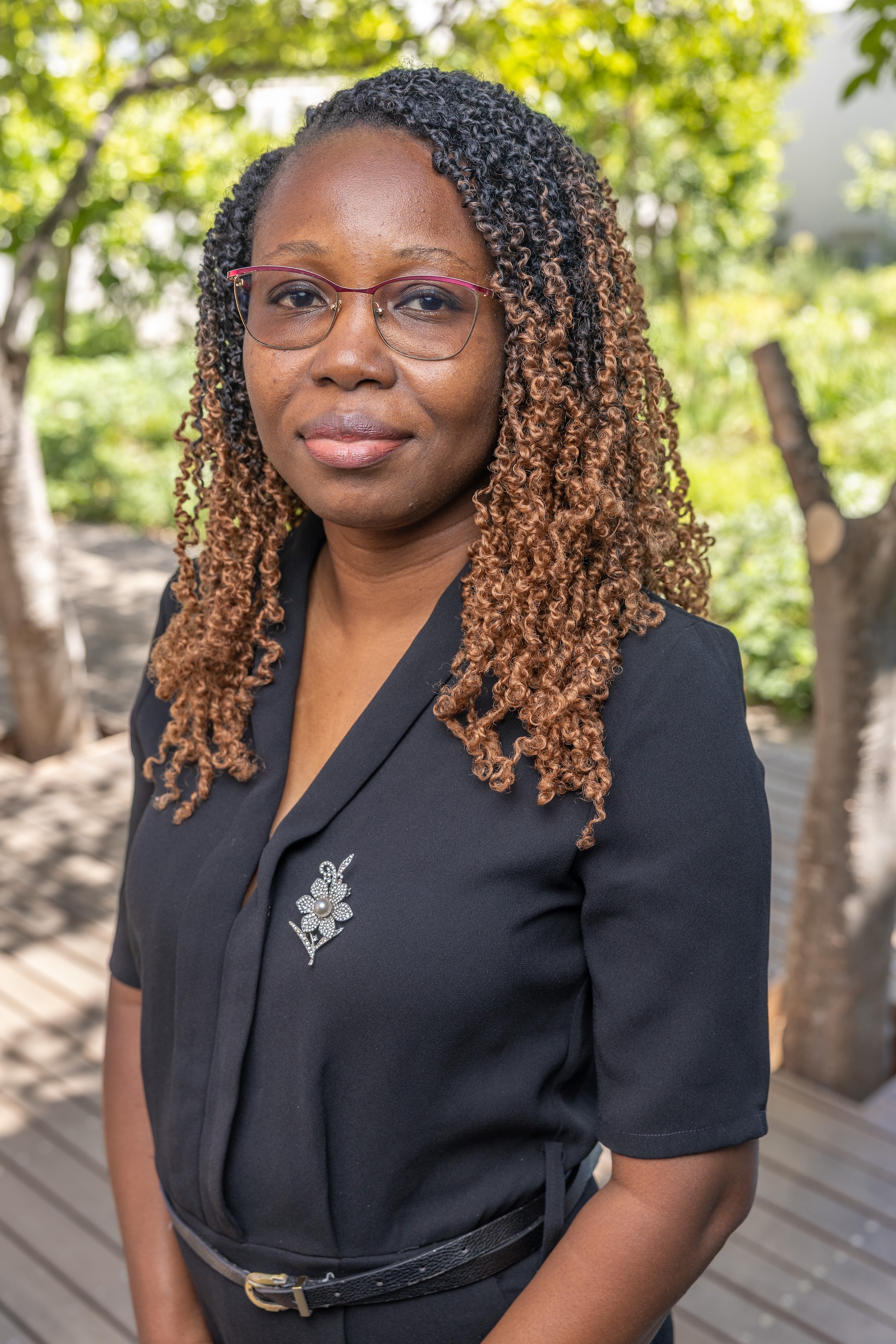
“Have you imagined what life would be like without energy sources? Fuels have become such an everyday topic that we rarely stopped to consider their origins until recently. Driven by population growth, societies are striving to develop energy-production methods that are faster, more accessible and more efficient,” said Iso Lomso fellow Elizabeth Von-Kiti of the Materials and Manufacturing Division, CSIR-Institute of Industrial Research, Ghana.
“Biomass is the primary energy source for cooking and heating in many developing countries, including Ghana, where nearly 70% of the population rely on fuelwood, charcoal, animal droppings, and agricultural waste,” she explained. “Biomass is a source of energy with net zero addition to the carbon cycle because it absorbs carbon dioxide. It’s a cleaner energy source than coal and fossil fuels. While biomass is a renewable energy option, the development of sustainable alternatives is crucial because of significant environmental and health concerns, including deforestation, exposure to harmful gases, and fine particulate matter. Biochar, a carbon-rich byproduct of pyrolysis, is gaining recognition as a sustainable and promising solution for waste-management and climate action, particularly in sub-Saharan Africa.”
Von-Kiti presented findings from her work on biochar produced from waste precursors for environmental applications and sustainability specifically looking at their potential for heating applications compared to traditional charcoal and LPG (liquified petroleum gas).
“Global energy demand keeps increasing due to population growth and industrialisation, but we never seem to learn what to do to make it better,” she said. “We have depended on fossil fuels since the industrial revolution. The current wars in Ukraine and Iran emphasise yet again the need to channel our attention to other energy sources.”
Von-Kiti noted that the USA, India and China are the highest energy consumers, and that fossil-fuel use has been repeatedly demonstrated to increase CO2 emissions leading to climate change and other long-term harms.
“In Africa, consumption of biofuels has increased over the years,” she said. “In 2023 energy consumption from oil products was 33.1%, for electricity 11.3% and for biofuels 43.1%.”
“On the African continent only about ten countries have achieved total electrification but even those with electricity are using biofuels. Countries in Central Africa have the highest consumption of biofuels despite having fossil-fuel sources.”
Biofuels include biodiesel, biogas and biochar. They are sustainable and renewable energy options that could replace fossil fuels. They fall into two categories – primary and secondary. Primary are derived from natural, organic materials – including wood and organic waste and are used for household cooking, industrial heating and electricity generation. Secondary are derived from processing biomass into liquid fuels for transportation and industrial use – these include sugarcane and jatropha.
Biochar is a form of charcoal produced through the thermochemical process of biomass under low oxygen conditions known as pyrolysis. It is porous and consists of about 70 to 90 % carbon as well as hydrogen, sulphur and nitrogen. Potential sources of biochar include livestock waste, agro-industrial waste, agri-waste, crop biomass and food waste.
“The process to produce biochar needs to be done in a carefully controlled way – if you have too much oxygen in the system it will lead to ash instead of an energy-dense product,” explained Von-Kiti. “Either acid or steam activation is needed if the final application is for activated carbon. By products in production of biochar yield three options – gas, liquid or solid – depending on its intended application.”
The applications include water and wastewater treatment, water filtration, soil amendments, energy production, catalyst and catalyst support, and carbon sequestration. And everyday uses include in air-conditioning filters, cosmetics, medical masks, teeth-whitening products and fuel for cookstoves.
“The functional property of biochar that is preferred is subject to the use of the biochar,” said Von-Kiti. “Carbon is found in every living thing on earth including humans. Depending on how the atoms are organised it ranges from very hard – like a diamond – to very porous like amorphous carbon biochar.”
Because of the craze for activated carbon use in Ghana, Von-Kiti and her colleagues set out to see what was in the various products were truly fit for the claim. Findings revealed that most were barely activated. They also undertook detailed studies on palm kernels, corn cobs and coconut husks – which are all common feedstock to produce activated carbon and further investigate their effectiveness in dye removal. These were compared for porosity, moisture content, fixed carbon, as well as the presence of other elements and their adsorption performance.
Biochar for cooking
They also looked at using biochar for as a heat source for cooking.
Von-Kiti explained that about 2.1 billion people worldwide cook using open fires or stoves fuelled by wood and charcoal. “This generates harmful household air pollution. The World Health Organization estimated that household air pollution caused 2.9 million deaths in 2021, including 309 000 deaths of children under age 5.”
“The forest cover in Ghana has shrunk by 84% in the last 100 years. This has led to changes in climate like flooding. To keep open fire and stove cooking we need to look at other energy sources.”
“Producing biochar from waste could provide a sustainable source that is climate safe with net zero emissions and offers waste management.”
Their studies have therefore looked at different characteristics to see if biochar is comparable to traditional charcoal cooking considering things like ash, moisture content, volatile matter, emissions and burning rate from sludge. To do this they did uncontrolled cooking tests using different types of stoves and experimenting with ratios of carbon to other substances like sawdust in the biochar composition.
They found that the biochar led to much lower CO2 production but that it used more cooking time – “It therefore proved good for simmering food with long heat schedule,” said Von-Kiti.
“However, we did find some stigma when people knew the source of the biochar,” she added.
She emphasised that it would therefore be important to understand how to shift consumer behaviour in favour of biochar. “We need to emphasise the risk of CO2 and the health risks of cooking smoke from other sources. We also need to highlight the waste and landfill reduction aspects that come with the use of biochar. This would be a new method to treat and utilise waste. Although we don’t yet know about any long-term health impacts, the Air quality Index (AQI) is acceptable. There is a definite impact on the environment of not cutting trees to obtain charcoal. Trees absorb CO2.”
There are currently no standards for biochar production and use in Africa. Von-Kiti’s STIAS project is therefore about creating guidelines for biochar production in Africa and comparing it to existing European standards.
“With growing demand, biochar production is expected to rise,” she said, “necessitating the adoption of safer, more-efficient production technologies. The goal is to make production and use as homogenous as possible, and standardisation is essential to ensure product quality, regulatory compliance and the long-term growth of the biochar market in the region.”