

“To those who are not entomologists the word ‘bee’ naturally signifies the honey bee, because of all insects it has had the most delightful, if not the longest and most intimate association with our species.” - Wheeler, W.M. (1923) Social Life Among the Insects.
Descriptions of honey bee social life from early Greek and Roman texts to the late 16th century, were largely fanciful and often proposed bee society as an exemplar for human societies. At the end of the 17th Century, the use of microscopes revealed the internal anatomy of organisms in all its astonishing detail. The ovaries and associated organs of a queen bee were particularly striking and provided the raw material for reimagining the social life of the honey bee from a biological rather than an allegorical perspective.
Work in 1912 by a Cape Town beekeeper, George Onions, introduced a significant anomaly into the seemingly orderly picture of the social life of honey bees. He showed that Cape worker honey bees were able to reproduce and clone themselves. This anomaly resulted from mimicry of the queen’s reproductive chemical signal.
A second anomaly (1991) emerged when some beekeepers transported Cape honey bees to a location north of Pretoria. There the Cape bees generated a socially parasitic worker that was able to infect colonies of the local honey bee resulting in the death of the host colonies. Understanding these two events provides a window into our understanding of honey bee sociality.
In the lecture, details of the biological discoveries will be explored to provide a richer insight into honey bee societies. Finally, the Cape laying workers have spawned a lineage of workers that act as social parasites in colonies of other honey bee populations. This unique phenomenon allows the effects of social parasitism on bee social organisation and its implications for the survival of colonies to be explored.
Biography
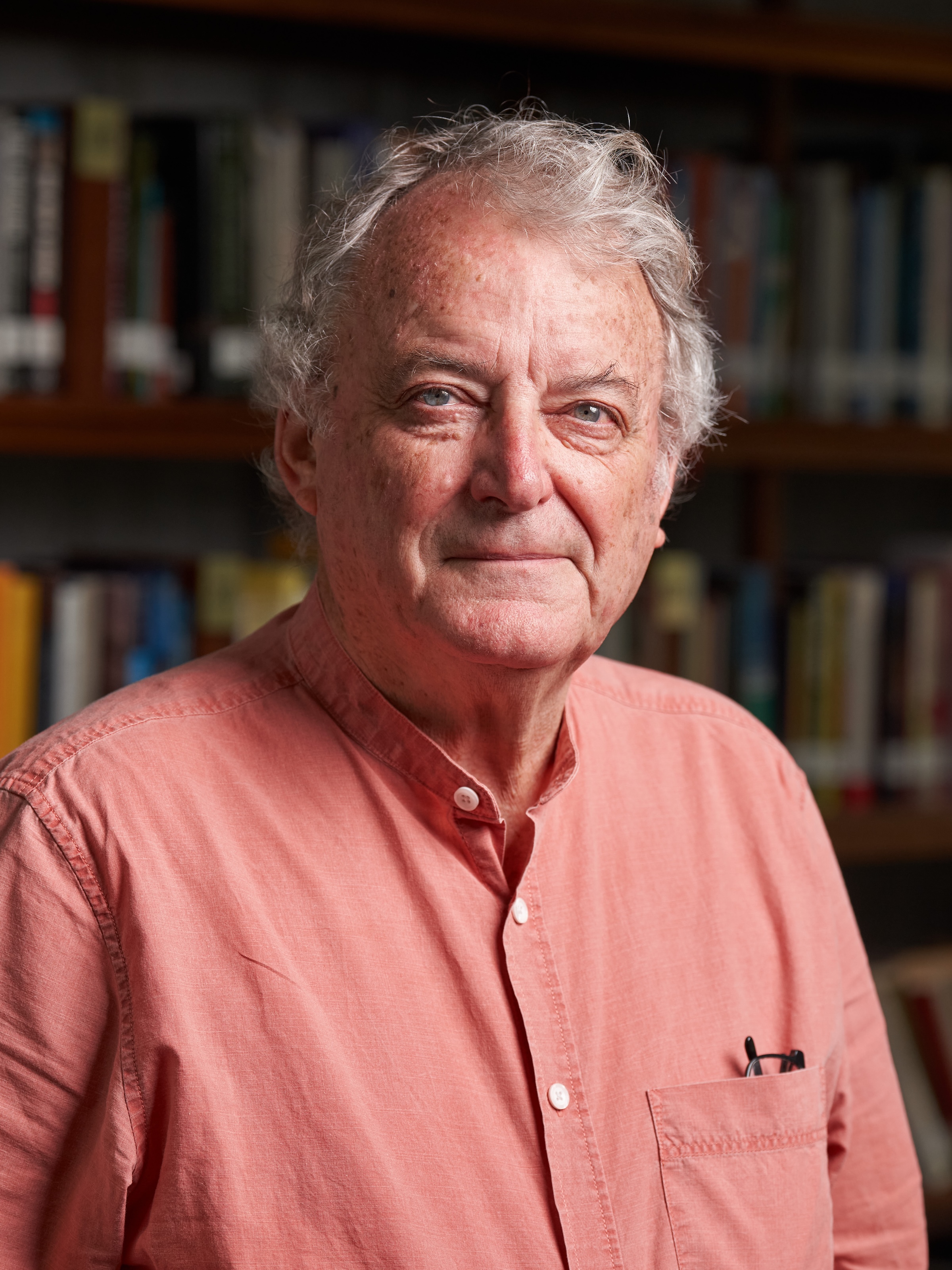
Robin Crewe studied at the then University of Natal in Pietermaritzburg and at the University of Georgia, in the USA. He was the Director of the Communication Biology Research Group at the University of the Witwatersrand studying honey bee chemical communication systems. He established the Social Insects Research Group (SIRG) at the University of Pretoria that continues under the direction of Christian Pirk with studies of a variety of social insects.
Crewe was the Vice-Principal at the University of Pretoria from 2003 until his retirement from this position in June 2013. He is a past President of the Academy of Science of South Africa (ASSAf).
His contributions to the development of academies of science in Africa were pursued through his role as President of the Network of African Science Academies (NASAC 2010-2012) and his election as a Fellow of the African Academy of Science, of the World Academy of Science (TWAS) and Foreign Associate member of the Hassan II Academy of Science and Technology, Morocco.
He was awarded the Harry Oppenheimer Fellowship for 2012, the ASSAf Gold Medal for meritorious service in 2013 and in 2019 was the winner of the National Science and Technology Forum-South32 Award for a contribution to science over a lifetime. He was awarded the John F W Herschel Medal of the Royal Society of South Africa for 2026.
He is a Senior Research Fellow in the Centre for the Advancement of Scholarship at the University of Pretoria. His current projects include a biography of the Cape honey bee and the development of bee-keeping practices in South Africa from the 19th century to the present. Together with his co-author Robin Moritz, he published the book, The Dark Side of the Hive.