
The evolution of individuality was first systematically addressed in a very influential book by Leo Buss in 1987. In this book he developed the concept that evolutionary innovations in replicator hierarchies were required to evolve complex cells and to organize them into cooperative multicellular individuals. But he did not go much beyond this developmental perspective, leaving open how the phenotypes of individuals in a population are formed and how these interact in social systems. In my project, I want to start from the perspective of the individual that has a genetically determined phenotype and which interacts with the environment and within its social context. My approach will be based on the most recent insights of how quantitative genetic mechanisms generate the phenotype, combined with the advances in the theory of cooperation. It will specifically also address the emergence of sexual phenotypes and corresponding behavioral strategies. While the approach is meant to be a general treatment of the interaction of biological entities, it will also have ramifications for understanding individuality in humans. I am therefore also interested to compare the biological view with the views of philosophers and sociologists on the nature of the individual, in order to achieve a broader synthesis of ideas and concepts.

A new evolutionary perspective on the nature of the individual
Related to this project

Event
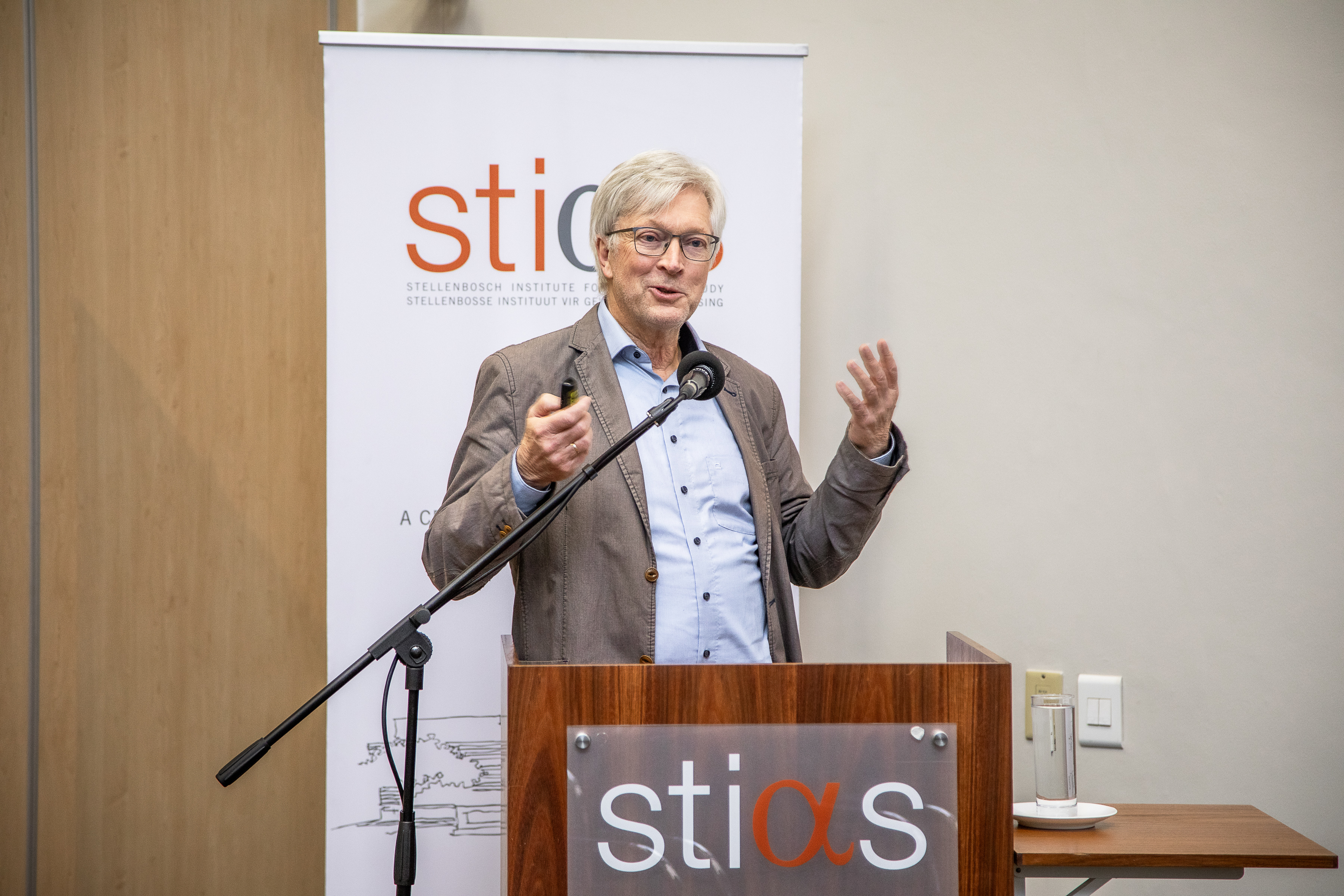
The evolutionary fluidity of sex differences - STIAS Public lecture series by Diethard Tautz
Register here by 12 August 2024 STIAS Fellow Diethard Tautz, from the Department of Evolutionary Genetics at the Max-Planck Institute for Evolutionary Biology will present a public lecture with the title: The evolutionary fluidity of sex differences Abstract: The occurrence of sexual reproduction in all living forms suggests that sex should be one of the evolutionary most stable pillars of life.
Article
The evolutionary fluidity of sex differences - STIAS Public lecture by Diethard Tautz
There is an evolutionary fluidity in sex determination, resulting in a spectrum of phenotypes in individuals.