
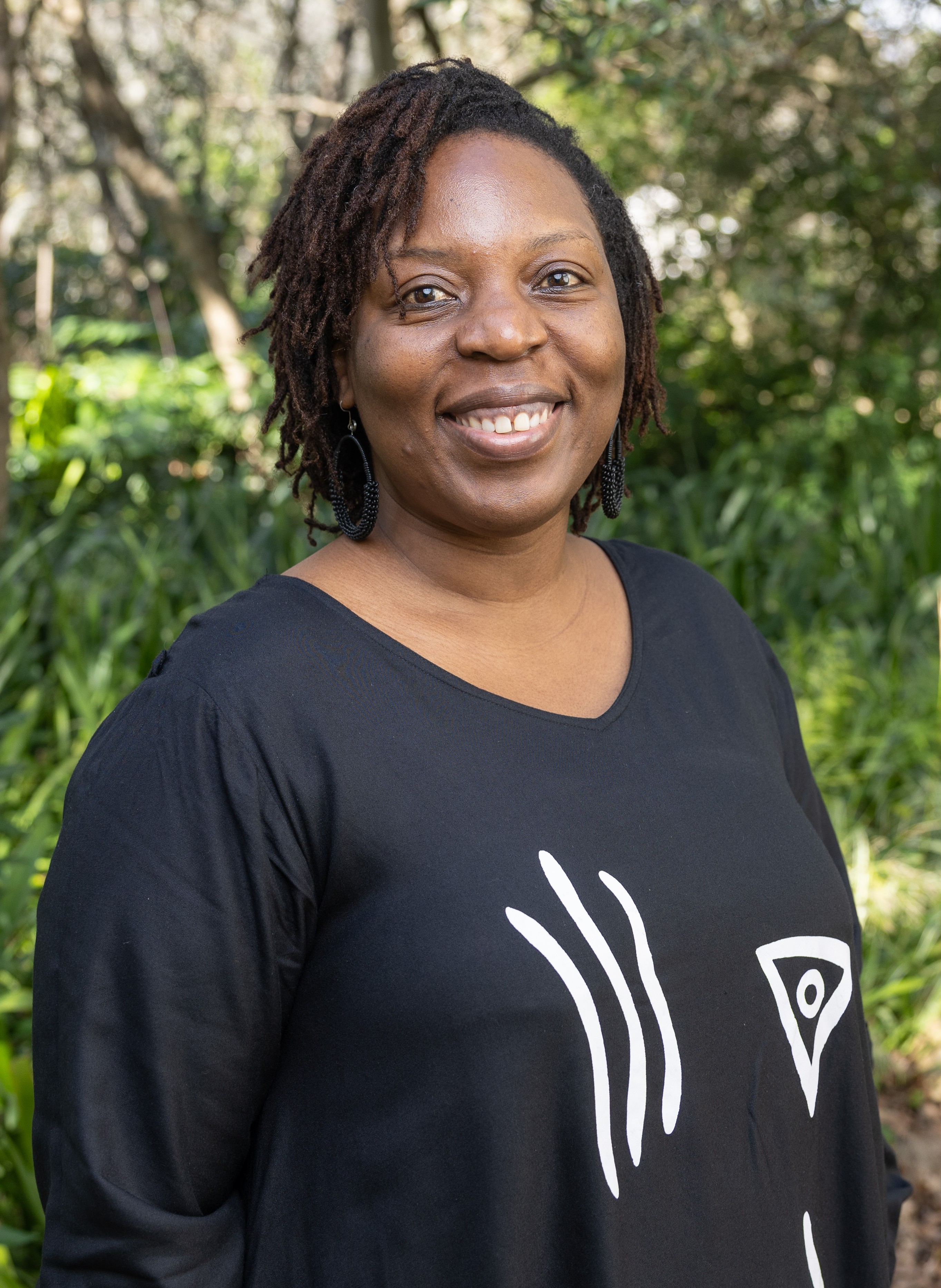
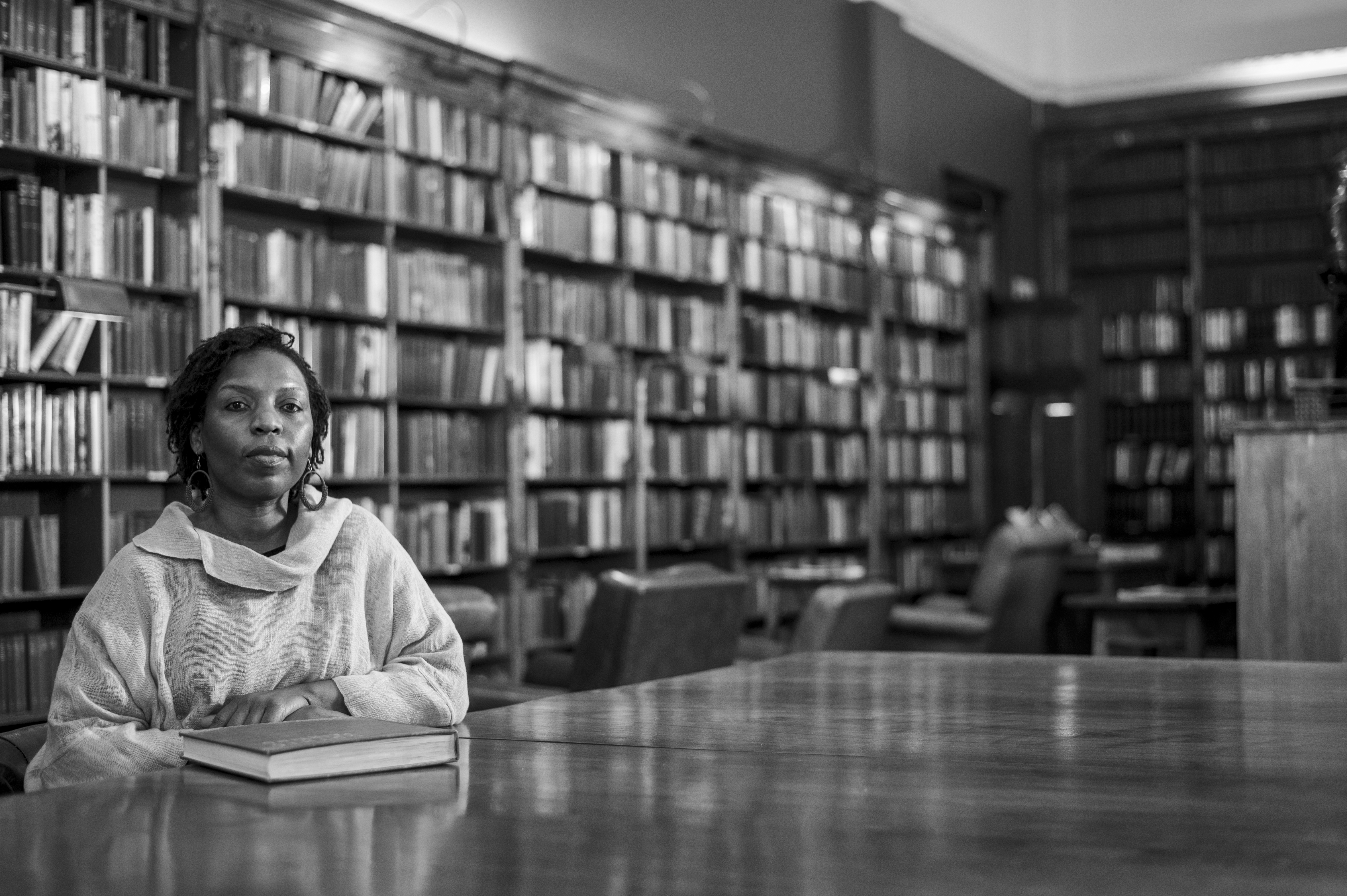
STIAS Artist-in-Residence Siphiwe Gloria Ndlovu treated her seminar audience to the rare opportunity of experiencing a reading from her latest work of fiction, a novella titled The Last of the Innocents by students from the Drama Department of Stellenbosch University.
“This work was written as vignettes,” she explained, “slices of moments in the characters’ lives. I realised it could be read as monologues. The idea of performance is not always there.”
But it certainly was in this case to the delight of the audience.
Ndlovu explained that the work is inspired by an article written by Leah McLaren in The Observer on Sunday, 4 August 2019, in which she wrote, “People born in the late 1970s are the last to have grown up without the internet. Social Scientists call them the Last of the Innocents.”
It follows five characters for 40 years of their lives.
“In the novella, five girls, born in 1979 – Suzanne, Portia, Chantal, Senzeni and Petronella – find themselves at Miss McDonald’s Boarding House,” said Ndlovu. “Suzanne’s father has been disappeared by one word: assassination. Portia’s mother has left her in the care of witches. Chantal’s mother has befriended Johnnie Walker. Senzeni’s parents have contracted something called new-mo nia. Petronella’s mother has already failed to live up to her daughter’s great expectations. Brought together by their circumstances, the girls form a friendship. And then one day, Senzeni stops coming to school. Suzanne, Portia, Chantal and Petronella may or may not be responsible for this. Over the next four decades, through direct communication, letters and social media, the friends struggle to come to terms with what happened to Senzeni.”
Scholar, filmmaker and writer, Ndlovu was born in Bulawayo, Zimbabwe and has lived in Europe, the US and southern Africa.
Her debut novel, The Theory of Flight was published in 2018 and followed in 2020 by The History of Man. The third title in her City of Kings trilogy is The Quality of Mercy published in 2023. She has won numerous literary awards including the Sunday Times Fiction Prize in 2018 and the Windham-Campbell Prize for Fiction in 2022. She is currently shortlisted for the 2025 Sunday Times Award for her fourth novel The Creation of Half-Broken People. Her films have premiered at the Zanzibar International Film Festival among others.
Ndlovu is known for her imagination, insight and empathy, the rigorous research that underpins her work and her engagement with history, memory, identity and voices silenced by the mainstream. Her works have largely focused on colonial and post-colonial life in southern Africa.
“STIAS works alchemy to bring together the perfect blend of people,” she said. “It been an amazing education – to talk, debate and listen.”
Writer and editor in conversation
In addition to the inspiring reading, the seminar included a conversation between Ndlovu and her editor, Helen Moffett, who was part of the STIAS 2024 cohort.
The two spoke about their relationship and process, and addressed the issue of AI in writing and publishing and the importance of keeping humans within the creative-writing process.
They emphasised that the relationship between writer and editor is primarily one of trust and negotiation.
“There are things I like to do that Helen doesn’t like – including using lots of adverbs and ellipses and probably misusing commas,” said Ndlovu. “It has to be a respectful negotiation in which you know that both will lose some things, but the aim is improvement. Human writers have idiosyncrasies – it’s important to understand that when an editor points them out it’s not an indication about the quality of the story or writing.”
“It’s about reaching towards one another,” she continued. “Horrible editing is about not listening to the author’s voice and not understanding the voice and story – it feels like an invasion.”
“It’s hard to edit a really good author,” said Moffett. “Every author has their own template which makes them distinctive. Siphiwe is such an oral writer. The commas, for example, remind us of where to breathe and pause, and of the oral traditions from which stories come.”
“My job is to raise questions about what the author is trying to do and about anomalies,” she continued. “I’m trying to understand and maintain the writer’s rhythm, resonance and, even, repetition.”
“I’m passionate about showing the academic alchemy and chemistry between human authors and editors,” she said. “I never become a co-author. My job is to persuade the author to improve the work, not improve it myself. AI will just correct, it won’t point out things, it won’t necessarily understand what the writer is trying to do.”
“As an editor I probably spend about 60% of my time on the first 30% of a novel. I have to get the author’s style and voice – once I have that, I feel more confident,” she continued.
“It’s about negotiation between what I’d like to hold on to and what she has suggested is better. It’s an ongoing journey for both of us,” added Ndlovu. “We are working towards something better together.”
“My primary concern is protecting my characters as much as possible,” she added. “If it’s not about being true to character, I’m happy to let it go. Otherwise, I’ll fight for it.
“As the editor I’m thinking of the readers,” said Moffett. “Authors invest in the world they have created. I am the reader’s ambassador. A manuscript is an artefact that needs to communicate to an audience.”
Asked why she had moved from academia to writing novels, Ndlovu said: “It took me four years to write my dissertation. I had to learn I could write it. The process was so rigid. I realised it was not my way of communicating. I had to learn the hard way that that kind of non-creative writing was not what I wanted to do.”
And asked about her very southern Africa positionality, she replied: “It’s about thinking about the world in particular ways. My readers understand the context, they can tell where I’m writing about without me telling them. A vision seen and shared builds trust. I advocate to be published first in Africa and for working with African editors.”
“It’s also important to understand how things are changing over time. I go to the archives to understand this for things I’m not living through. I’m looking at very particular moments in history from a very particular place in the world. I try to be as real as possible.”