
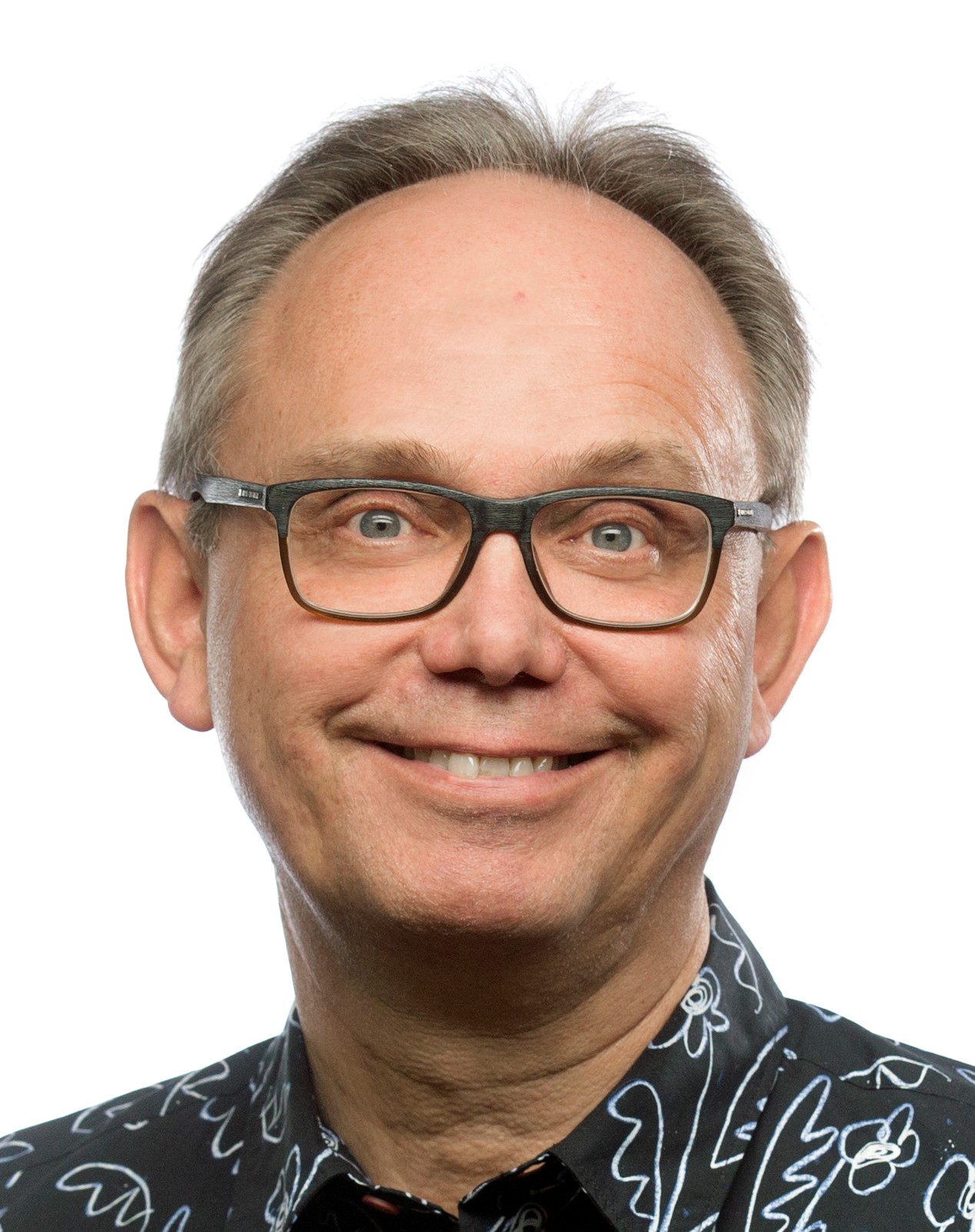
“I am looking forward to discussing how chemistry could be reimagined and perhaps redefined, with inspiration from the definition of chemistry by Claude Louis Berthollet: ‘the art of decomposing natural bodies, of examining their diverse properties, and of combining them anew to form products of use to humankind’. To reimagine chemistry we have to both emphasise the need to meet today’s needs while safeguarding human health and the environment for future generations,” said Lennart Bergström of the Department of Chemistry at Stockholm University.
Bergström was delivering the last seminar of 2025 and admitted that he had changed his topic “I’m now working on something I’ve thought about for a long time. This is the place to do things like that.”
“Chemistry has reshaped almost every system that sustains—or threatens—life on Earth. It is shaping and reshaping the world and the planet,” he continued. “There are 280 million chemical compounds registered in the Chemical Abstracts Service (CAS) registry. Some are natural but the vast majority are synthetic. Detailed knowledge about the effects of the vast majority of these complex molecules is not known. We probably only understand fully a few thousand of the 280 million registered compounds.”
“Chemistry is involved in the triple planetary crisis – climate change, pollution and waste and biodiversity loss – that we currently face,” he added.
Describing chemistry as having a somewhat Janus face he pointed to some of the good and the bad in its history. “Chemistry and chemicals can have both positive and negative effects. We need to handle both better.”
He started by explaining how his own childhood influenced his career choice but also made him understand the good and bad of the field first hand. Bergström grew up in the industrial town of Sundsvall which, at that stage, was the most polluted town in Sweden. He described the pungent aroma of the very high sulphur-dioxide levels, the heavy dust fall-out and the water pollution from toxins and heavy metals. “You couldn’t swim in the sea and bronchitis and eye problems were pervasive. But it only took 20 years to turn it around. The Environmental Protection Act of 1969/70 and rapid technological development led to the installation of scrubbers, wastewater treatment in the paper mills, and replaced oil burners in single homes with distance heating. Sulphur dioxide dropped eight times in 20 years and discharges into the fjord dropped by 80%.”
He described some of the positives like the work of Fritz Jakob Haber a German chemist who received the 1918 Nobel Prize in Chemistry for the Haber Process, a method to synthesize ammonia from nitrogen and hydrogen which made large-scale fertiliser synthesis possible. “This made it possible to feed a large part of the growing world population; it is estimated that half of the nitrogen in your bodies is synthetic.”
As well as the negatives – the worst chemical accident ever – the Union Carbide disaster in Bhopal, India in 1984 – which caused over 2000 deaths and about 3900 life-changing injuries instantly, but it’s estimated that over 20 000 people died in the longer term and 120 000 still suffer the health consequences.
So, what is chemistry and who are the chemists?
To explain what chemistry is, Bergström quoted 18th century French chemist Antoine Lavoisier who wrote “Nothing is lost, nothing is created, everything is transformed. We ought, in every instance, to submit our reasoning to the test of experiment and never to search for truth but by the natural road of experimentation and observation; and Life is a chemical process”
Chemistry is often called operational realism – the experiment that is at the core of chemistry must be relevant and represent as close as possible the reality being studied.”
Answering the question of who the chemists are, he highlighted Marie Curie – whom he described as the devoted experimentalist – winner of two Nobel Prizes “but her experimentations were often gruesome and dangerous”; Aaron Klug and Ahmed Zewail, the two Nobel laureates in Chemistry Nobel with an education in Africa (South Africa and Egypt); Jabir Ibn Hayyan who lived in the 8th century and developed many methods that are still used today; and, Agnes Pockels – who he described as “my hero, a self-taught chemist, who was denied entry into university and did experiments in her kitchen”.
But he also highlighted some of the ‘bad chemists’ including Thomas Midgley Jnr – who worked for General Motors and knew about the toxic effect of lead as far back as the 1920s but promoted its use as an additive to prevent knocking in internal-combustion engines. “It was only legislatively phased out in 1984 in the US and 2000 in Europe – 75 years later.”
Bergström also highlighted the development of Freon 12 – a type of chlorofluorocarbon used in refrigeration- which was found to attack ozone in 1974 and was banned by the Montreal Protocol in 1987. “Freons on the atmosphere are going down, showing that we can combat some of the problems we cause.”
Choosing restraining chemistry
Bergström also described his own work and highlighted both how to design appropriate experiments to study complex phenomena, and how he uses some simple principles to minimise the potential harm to humans and the environment when chemistry is used to develop products of use to humankind.
This includes work in biomineralisation and crystallisation; looking at the ancient craft of Bogolan dyeing which utilises abundant materials, avoids chemical modifications and limits biodegradability; and, trying to understand the process of exoskeleton production in arthropods for the potential production of mechanically strong, moisture-resilient materials.
He focused in detail on a project looking at upcycling textile waste, explaining that about 120 million tonnes of textiles are produced annually of which 60% are synthetic fibres. Only about 10% of textile waste is used, the rest goes to landfill or incineration, with the fashion industry therefore responsible for 4 to 8% of greenhouse-gas emissions.
“At the Kantamanto Market in Ghana, for example, 15 million pieces of cloth are handled per week with half from the UK and China. Sixty to 70% is sold as second-hand clothing but 30 to 40% is waste. We are looking at the possibility of upcycling of cotton waste into insulation foams.”
He also mentioned that during the initial COVID-19 pandemic that students and postdocs at Stockholm University came together in making and distributing hand sanitiser. “In the first three weeks we were major supplier to the elderly homes in the Stockholm area.”
Concluding by returning to definitions, Bergström indicated he had participated in the Nobel Symposium on Chemistry for the Future in May this year which had developed a declaration highlighting the need for chemistry to focus on ‘ethical, sustainable and innovative solutions to global challenges’ and the need for chemistry to be ‘a catalyst for a fairer, more sustainable, and resilient world’. However thus far, the declaration has had few signatories from the Global South and from the chemical industry.
“Of course this is not in isolation,” he continued. “There are ongoing discussions with the International Union of Pure and Applied Chemistry (UPAC). UPAC is crucial and so is the Nobel Committee for Chemistry – if they highlighted these ideas in awards, it would have an enormous impact.”
In discussion, he said: “I’m most concerned about the effects on biodiversity because those losses cannot be replaced – it’s the biggest threat.”
“As chemists we have to show restraint. We have to retrain the toolbox and use materials we have a reasonable belief are reasonably safe,” he continued. “We have to have the innovative components but the complexity of using poorly known substances needs to be reduced to reduced.
And the one resolution he believes could make a huge impact? “Would be the phase out of fossil fuels. It will change everything for the chemical industry.”