
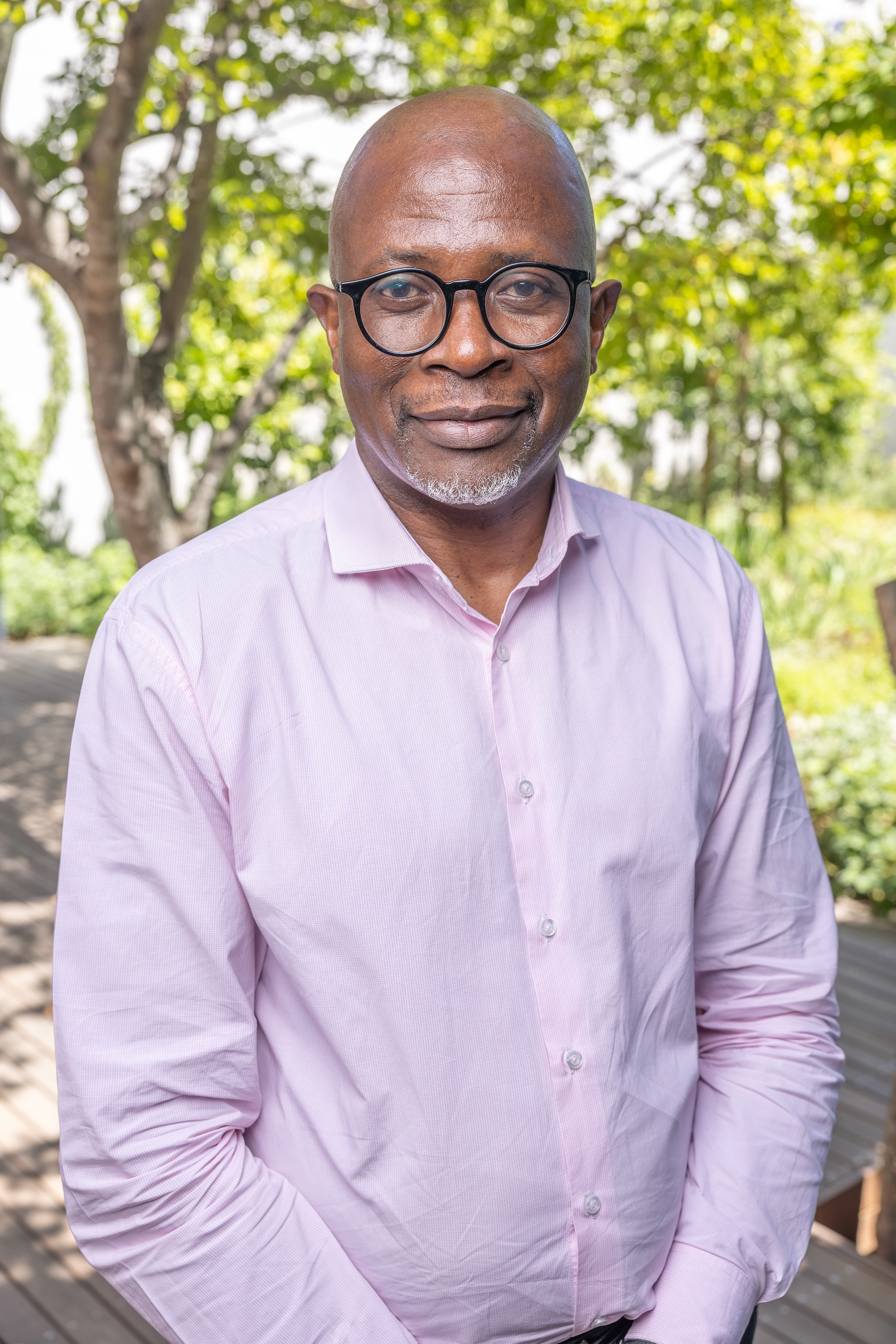
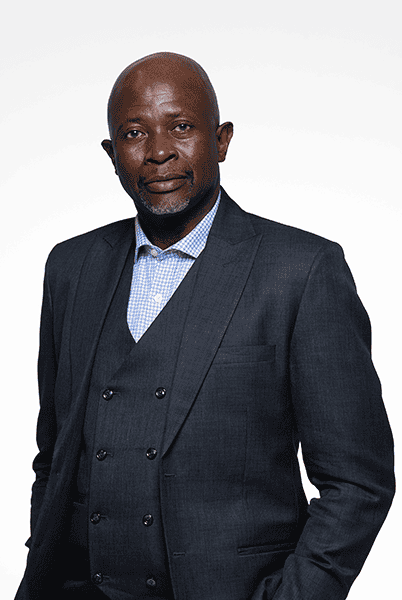
“From the Global South perspective, it’s acknowledged that in research and higher education, the partnerships have been driven by the interests of the funder all along. Africa has sparingly experienced Africa-led, Africa-focused and Africa-driven pursuits as nations still spend insignificant amounts on research relative to GDP. This has skewed developments and innovations in general have failed to take cognisance of local knowledge and ways of being,” said Nelson Torto, Senior Science Fellow (Africa) for the Swedish foundation for international cooperation in research and higher education (STINT).
“From a STINT perspective, responsible collaboration and equitable partnerships are most desirable hence I will engage to catalyse conversations that build and offer opportunities for co-creation in research and higher education.” he continued.
He explained that STINT was founded by the Swedish government in 1994 to build knowledge and competence in the Swedish research and higher-education sector through internationalisation. To do this it invests in international projects and academic co-operation with countries outside of Europe, the European Free Trade Association (EFTA) and the UK. In addition to supporting initiatives driven by researchers, teachers and university leadership, STINT also serves as a knowledge resource.
“Through globally selected representatives with expertise and local presence, STINT provides deeper insight into research policy trends, the development of science ecosystems, and strategic opportunities for cooperation,” said Torto.
“The value proposition is about long-term, trust-based relationship building to ensure that science intelligence supports well-funded, effective strategic decisions.”
He explained that the STINT team is multinational and from different backgrounds with most being former researchers. Team members have responsibility for different global regions.
STINT exists in the space where balance convergence is multilateral and co-created, and where equity, solidarity and responsibility are promoted. STINT aims to build competence and knowledge in the international space and to support the research and higher-education sector to drive the agenda.
Torto’s role at STINT is as a catalyst and resource person with responsibility on Africa.
“We aim to facilitate both ends of collaboration from Sweden and Africa, and present an opportunity where people can think for themselves in a collaboration. Overall, we are trying to encourage and provoke thinking in this space.”
“We are a knowledge resource – we write about everything and sometimes nothing,” he joked.
Torto gave an overview of some of the key activities that STINT is currently supporting.
Among these he included the South Africa-Sweden University Forum (SASUF) − a transformative project uniting 37 partner universities in Sweden and South Africa. The project brings together leading researchers, teachers, students, university leaders and other stakeholders, and aims to develop joint solutions to the challenges posed by the UN Sustainable Development Goals and Agenda 2030. In particular, the current phase of SASUF aims to include industry as well as other universities outside South Africa.
He also highlighted how such science and technology collaborations contribute to using soft-power as they drive so-called science diplomacy. “There has been a substantial growth in science diplomacy internationally,” he said. “STINT aims to nurture science diplomacy in and for Sweden which, overall, remains an under-the-radar diplomatic player.”
He also pointed to the current global power shifts and the massive influence of tech diplomacy.
Complex and multifaceted Africa
Turning to his focus on Africa specifically, Torto emphasised the complexities of the continent which are also part-and-parcel of its science and higher-education sectors. He acknowledged that by coming up with the Africa Charter on Transformative Research Collaborations, the conversations about equity in collaboration are gaining momentum. He highlighted that already in January 2026, the Nelson Mandela University hosted the Madiba Nexus: Advancing balanced north–south research partnerships conference. In February the National Research Foundation, British Academy and the Royal Society hosted the Equitable partnership conference 2026 in Pretoria.
“Africa is huge and complex. It is 30.37 million square kilometres therefore its size can encompass several major nations of the world,” he said. “Historically imposed borders have caused division, there is also division between Anglophone and Francophone regions, and mobility remains a challenge.”
He also noted that R&D spending though increasing is still mainly located in a small number of key players – Egypt, South Africa, Algeria, Nigeria and Morrocco.
“There remain power imbalances in epistemology, language and the research capabilities and resources of education and research institutions.”
“In the past research collaborations tended to be donor-funded and -driven partnerships which were not necessarily developing the research leadership capacity one would want to see.”
But he pointed out that this has started to change through initiatives like the Developing Excellence in Leadership, Training, and Science in Africa II (DELTAS Africa II) which funds 14 consortia in nine African countries, with partnerships and networks across the globe. This programme, managed through the Science for Africa Foundation (SFA), receives funding through the Wellcome Trust and the UK’s Foreign, Commonwealth and Development Office and aims to support Africa-led world-class scientific research that is locally relevant and improves health across the continent and around the world, whilst developing research leaders and strengthening their institutions.
Other important areas that Torto highlighted and discussed included the need to realise the differences between universities in Africa and African universities. “We have to ask what is impactful and to whom,” he said.
“University ranking systems are also being questioned,” he continued. “It might not be important to publish in Nature if you come from a village without clean water. We need research with impact in both Stockholm and Khayelitsha. These have different needs. Currently, if you are not ranked by traditional metrics, you are seen as not performing but what about your community? It’s not good enough, but it’s a big debate.”
Responding to a question that sought to encourage governments to increase universities, he highlighted that there were many competing societal needs, hence quality delivery could only be assured through some controls around private universities. “We need proper systems for monitoring,” he said. “We are seeing some challenges and need to ensure that private education reaches appropriate criteria or it’s out.”
Asked about the monopoly of the international academic publishing system, he replied: “We need to do it better, but it needs coordination and energy to change. We have to show flexibility and collaboration and develop a system that takes cognisance of different needs in different areas.”
He also tackled the brain drain from Africa. “We want the best students to remain on the continent but there are also good counter arguments about people going elsewhere too. It is a fact that education, in particular research, benefits where it is conducted rather than the individual involved.”
He also commented on the role of new global powers and corporates in this space. “No country is currently doing more than China in the tech space. China is driving the agenda in a big way in some areas like electric cars, for example, and cannot be ignored. There are also some companies that are very big – for example M-PESA in East Africa.”
“The development of a Free Continental Trade area might give Africa the voice and numbers to move things in the right direction,” he continued. “It needs very high-level organisations and individuals to move this forward. It could transform African opportunities and change the perspectives and drive from international collaborators.”
“African governments do have money but you have to find the right person and understand what is important at the time and how you can demonstrate impact. We also must get better at articulating the benefits of our work and telling our story,” he concluded.